IMAGINAL SPACES

Sam Williams
About
I create interactive experiences that act as portals between material and imaginal realms — blending accessible commercial formats like video games and genre fiction with techniques from performance and installation art. Informed by Indigenous knowledge systems as well as esoteric and avant-garde lineages, the approach is grounded in a conviction that emerging technologies offer a path back to the original function of art and story: collective access to transformational states. I draw on a several narrative traditions — from years spent translating experiential data into story through reportage, art writing and theatre to the folk traditions of a rural upbringing rooted in a lived relationship with land through craft and labour. The resulting storyworlds are relational — emerging from and returning to encounters with people, places, and presences across disciplines, cultures, and languages.
INTERACTIVE
LONDON LENS
Genre: Located Real-World AR
Date: December 2023
Tools: Unity, AR Foundation, Niantic Lightship, Niantic Wayfarer
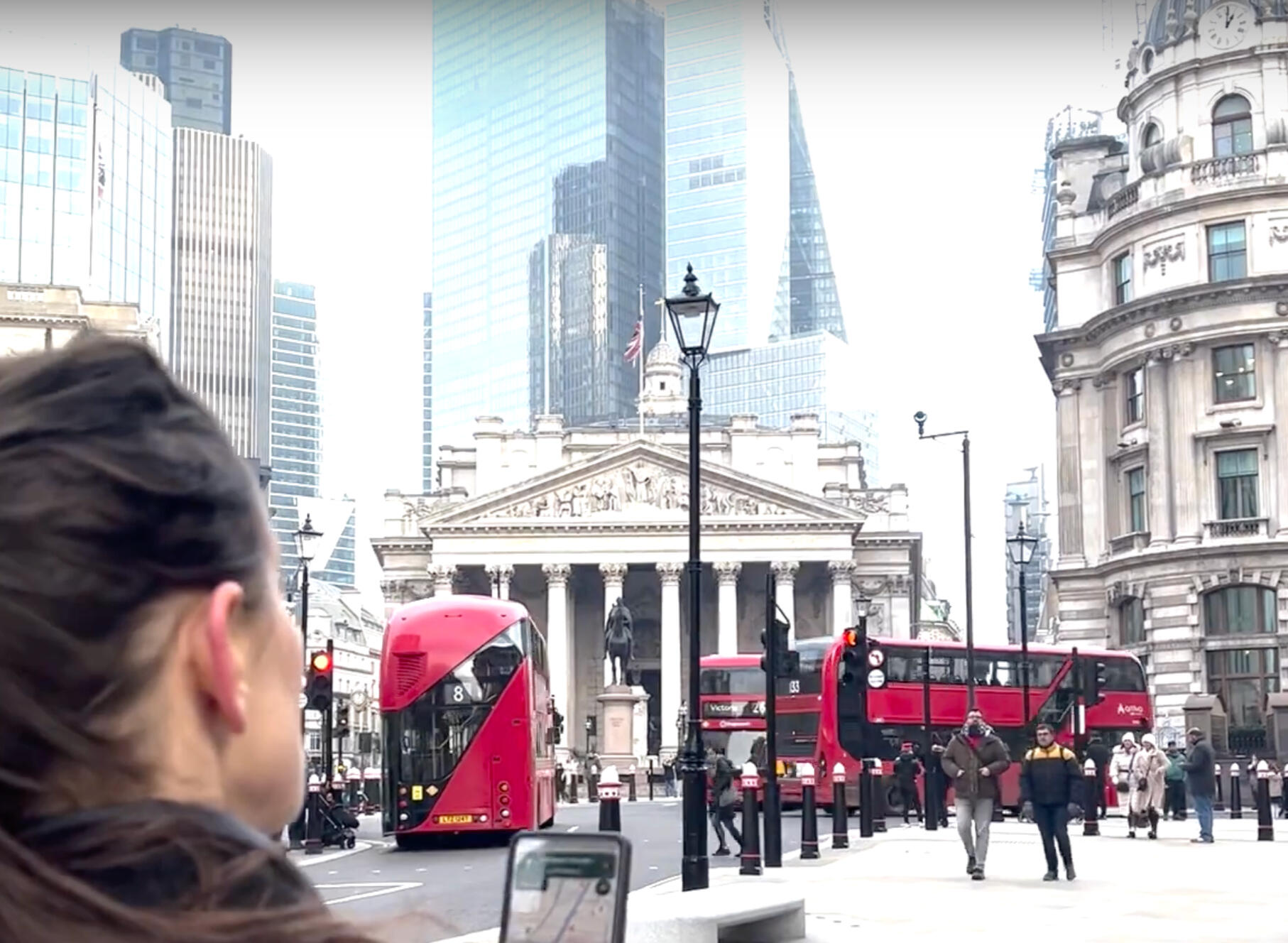
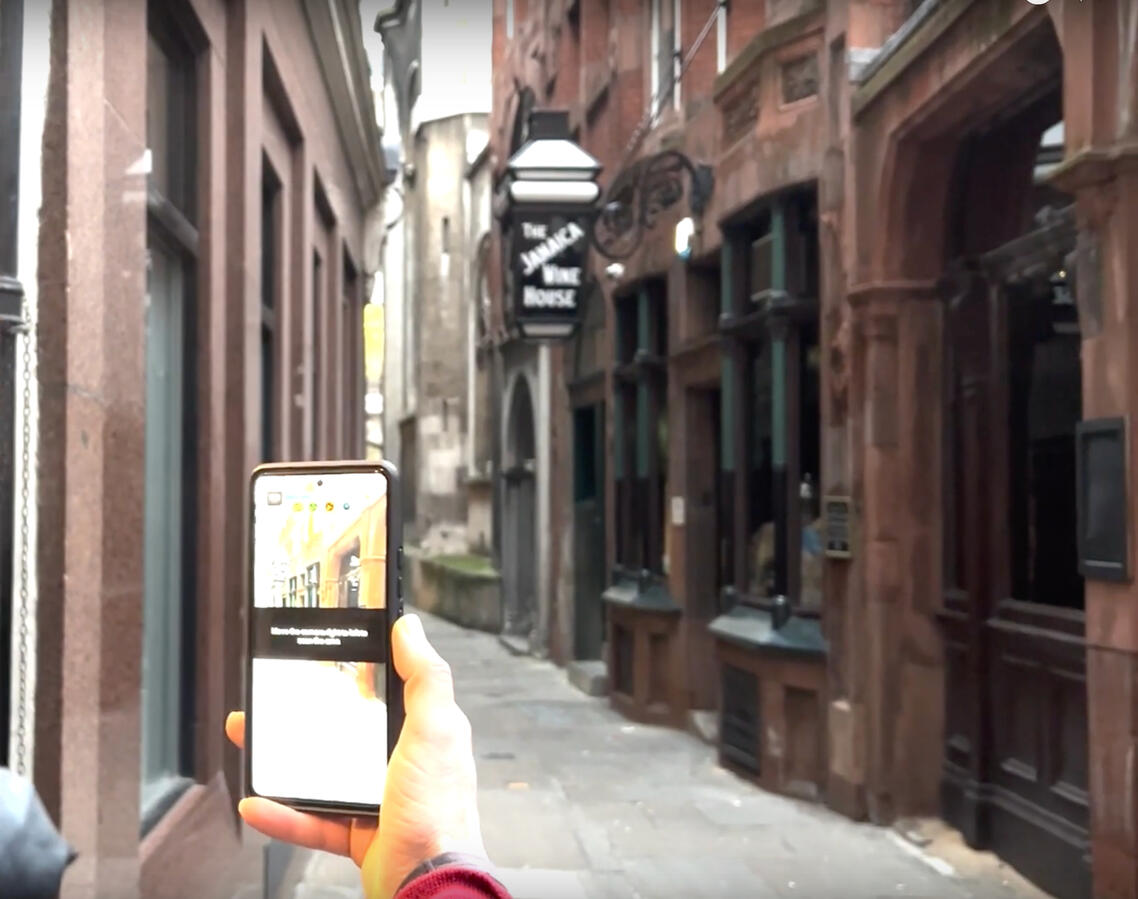
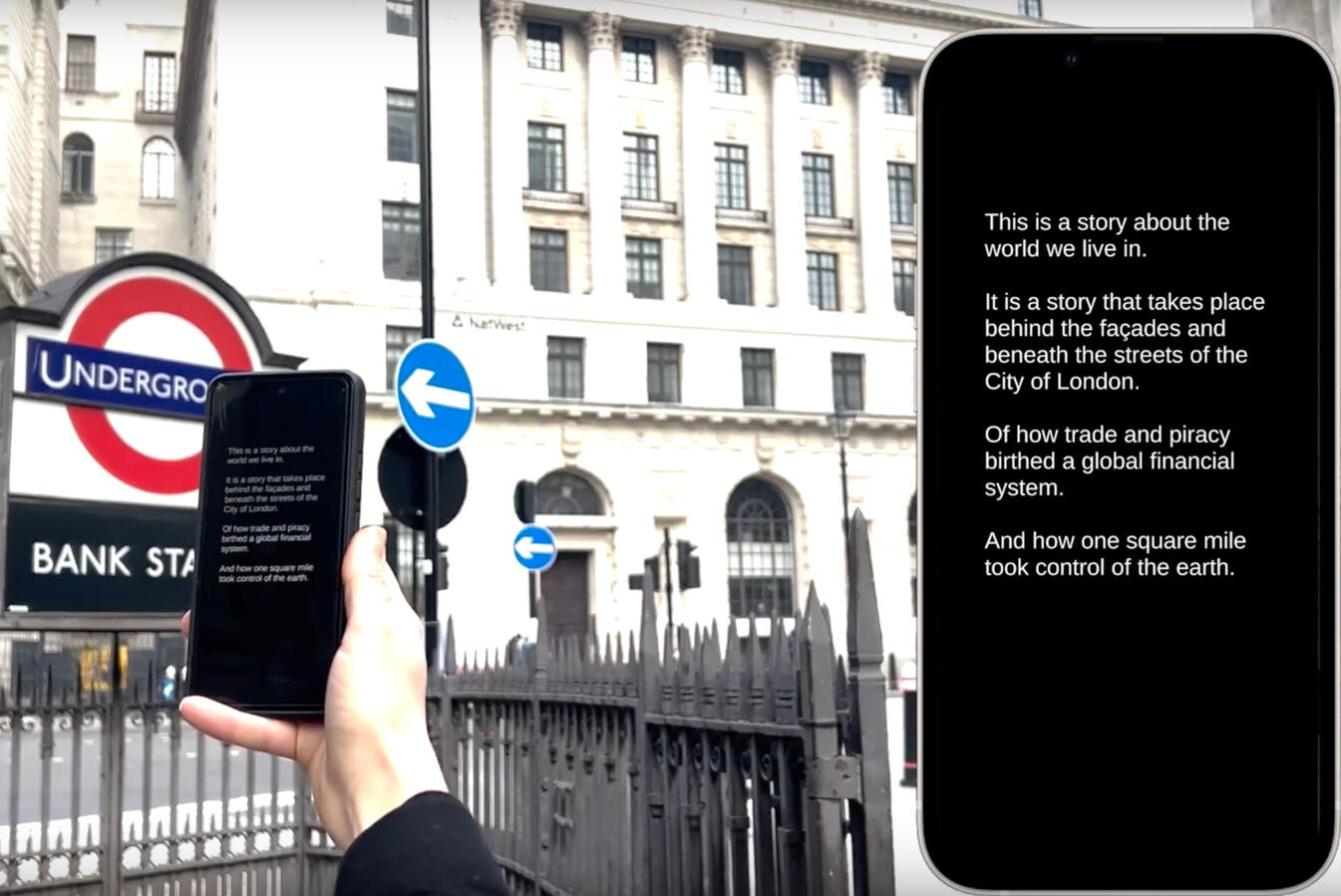
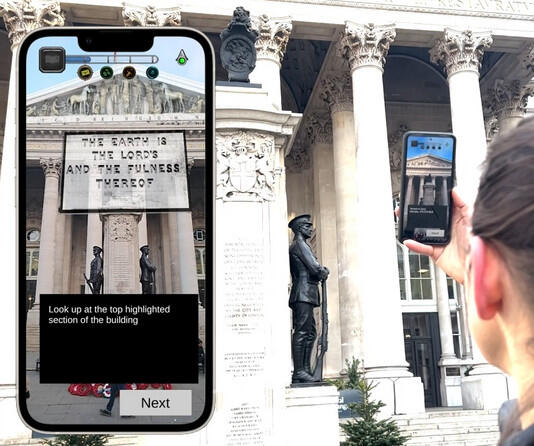
London Lens transforms the City of London into a live field of encounter. As users move through its streets, augmented reality elements reveal their hidden colonial origins. By directing focused attention at charged sites, LondonLens invites users to participate in their ritual transformation: surfacing suppressed histories, disrupting the ‘glamour’ of solidity and permanence cast by empire, and seeding new futures.A VPS map guides users to four atmospheric locations, each corresponding to stages of colonialism. Through interaction with architectural features, users trigger audio and AR elements at key sites, to revealing the improvised origins of the global financial system — where wagers made in coffee houses speculated new futures into being through acts of collective fiction. The journey between sites engages users in a ritual of walking and attending, echoing the clerics of Old St Paul’s who paced the gardens of Paternoster Square — now home to the London Stock Exchange — in a devotional circuit, charging the ground with spiritual intensity.Practised in monastic traditions across cultures, walking meditations transform space through attention. Here, audience attention is directed to spectral litanies that erupt from the financial district’s smooth façades, memorializing lives disfigured by the colonial project. Through activations of colonial residue within the fabric of the City, audiences enter a charged realm where past, present and future converge, rupturing the illusion of stability of global systems, and reopening the field of the possible.
THE RESTLESS
Genre: Cosmic Horror Adventure
Date: October 2023
Tools: Unity
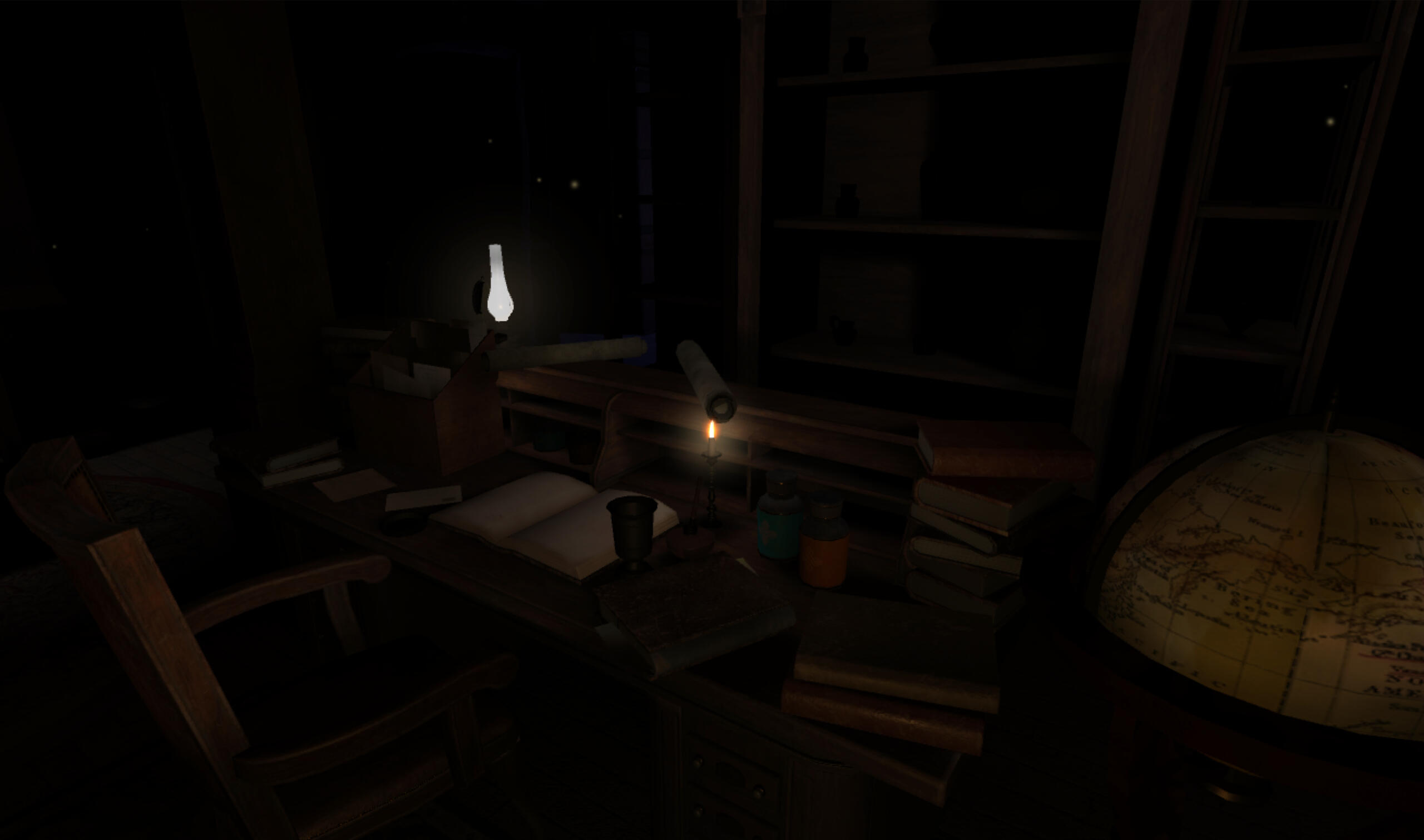
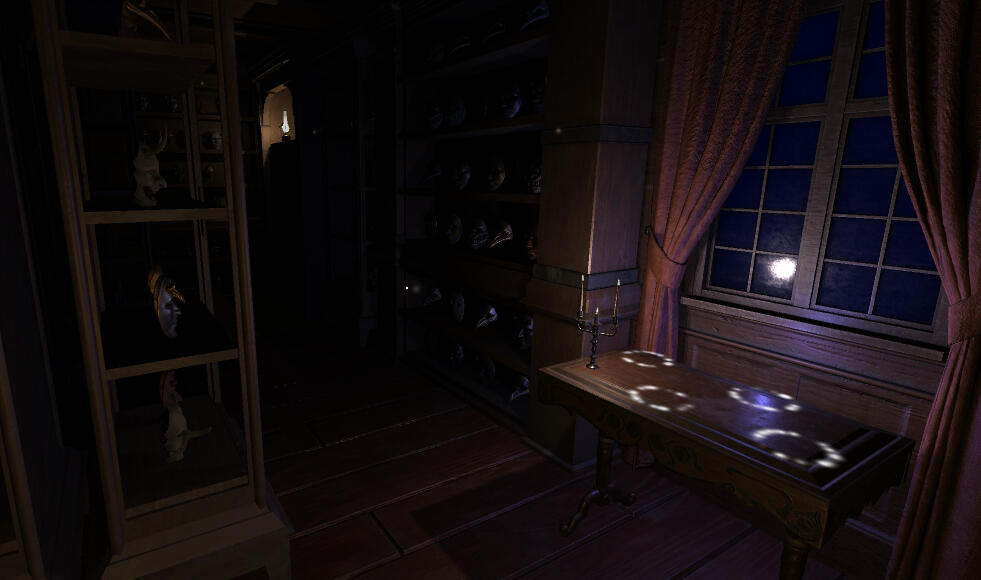
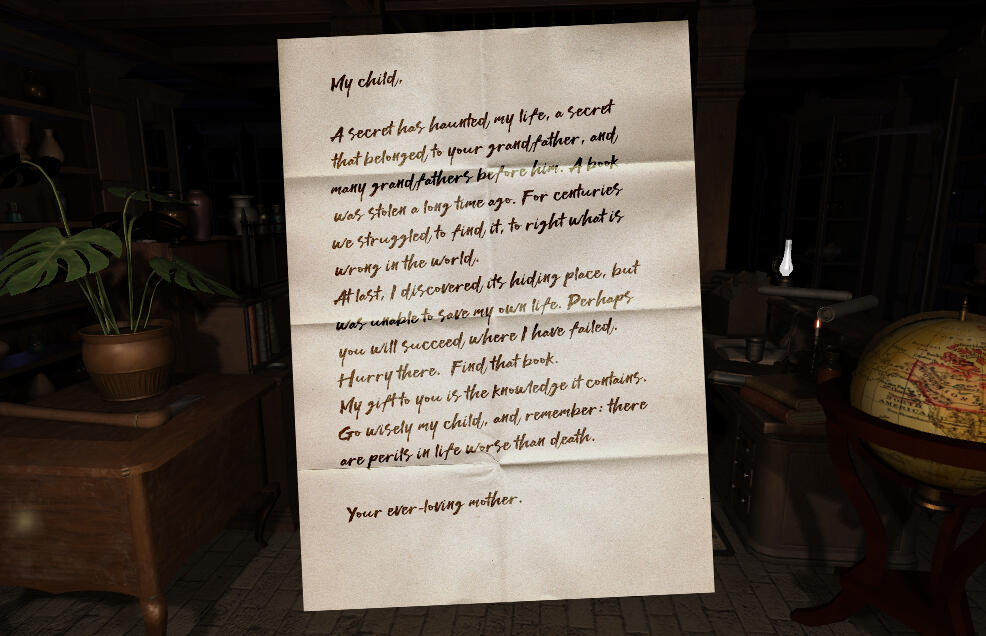
This interactive digital experience inverts the "haunted object" trope (Lovecraft, Conan Doyle) to reveal the colonial institution as an object of demiurgic possession. Participants navigate the glitching unreality of a Victorian museum, moving between material and spirit realms with the help of a curator who embodies a colonialist logic of measurement and material preservation. Through gradual revelation and shifting allegiance, participants unlock narrative pathways that allow them to restore spiritual vitality to a reality that has forgotten its animate nature.

SHARED ROOTS
Genre: Narrative Adventure Puzzle Game
Date: March 2023
Tools: Unity
OVERVIEW
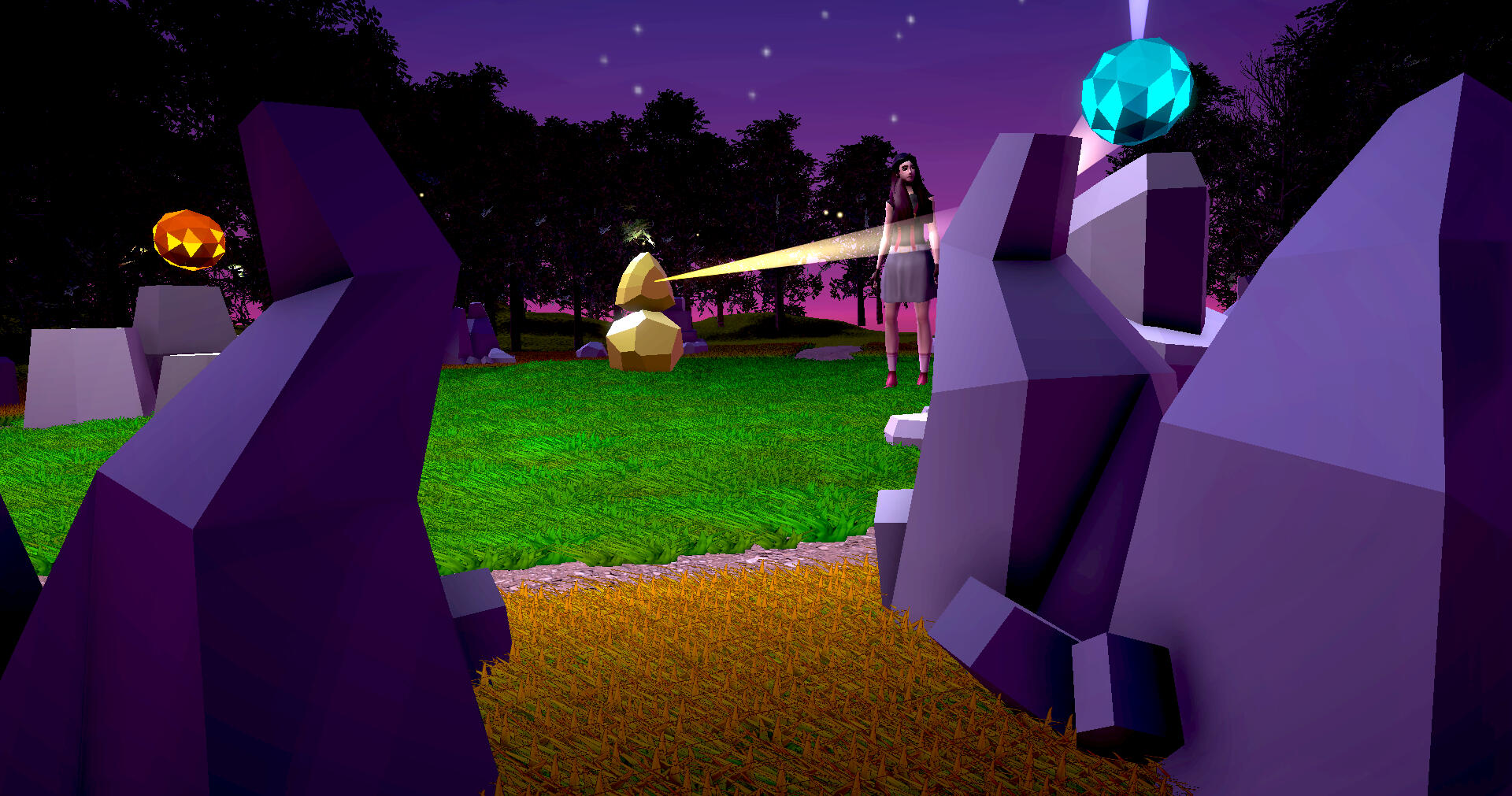
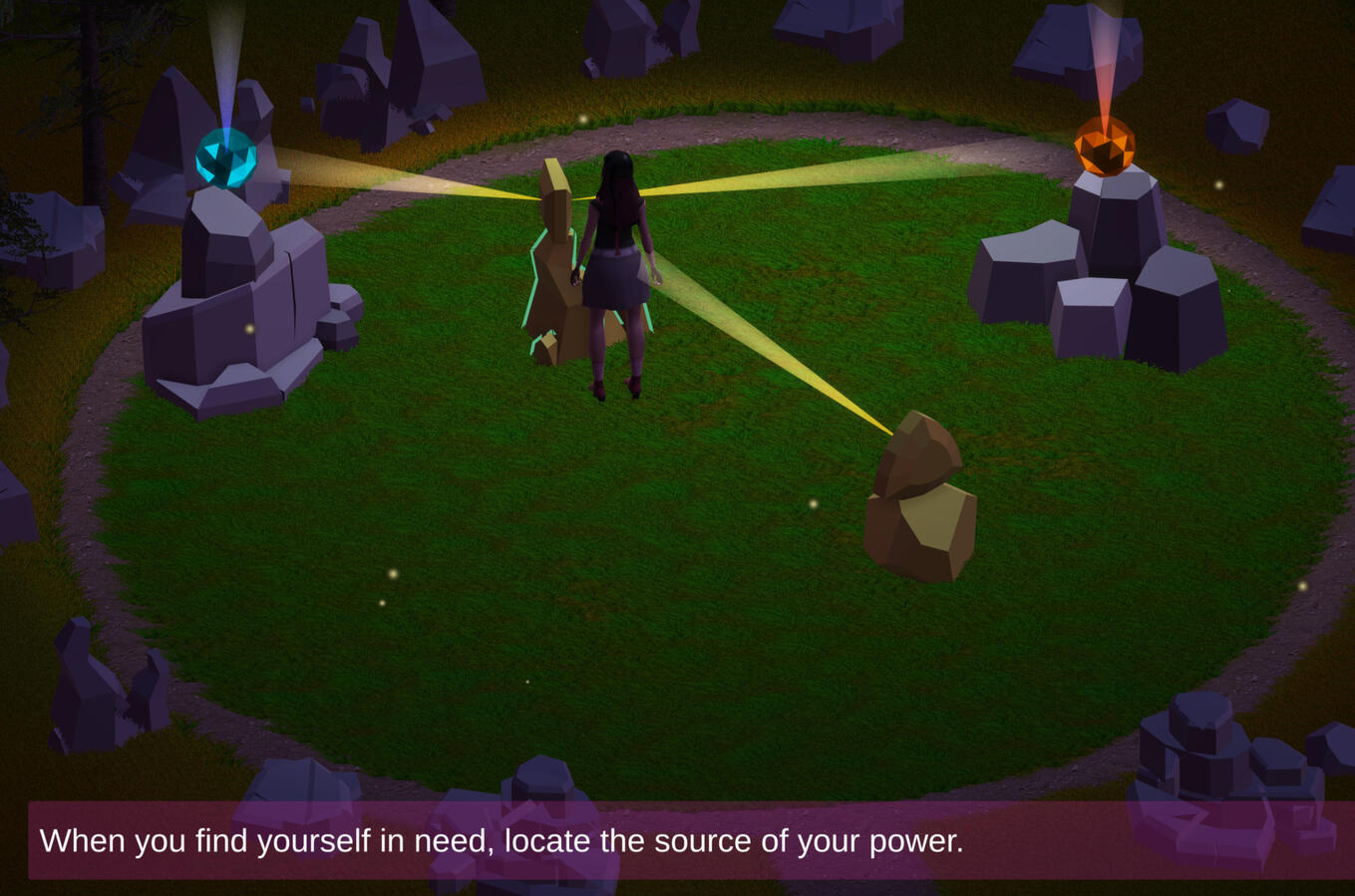
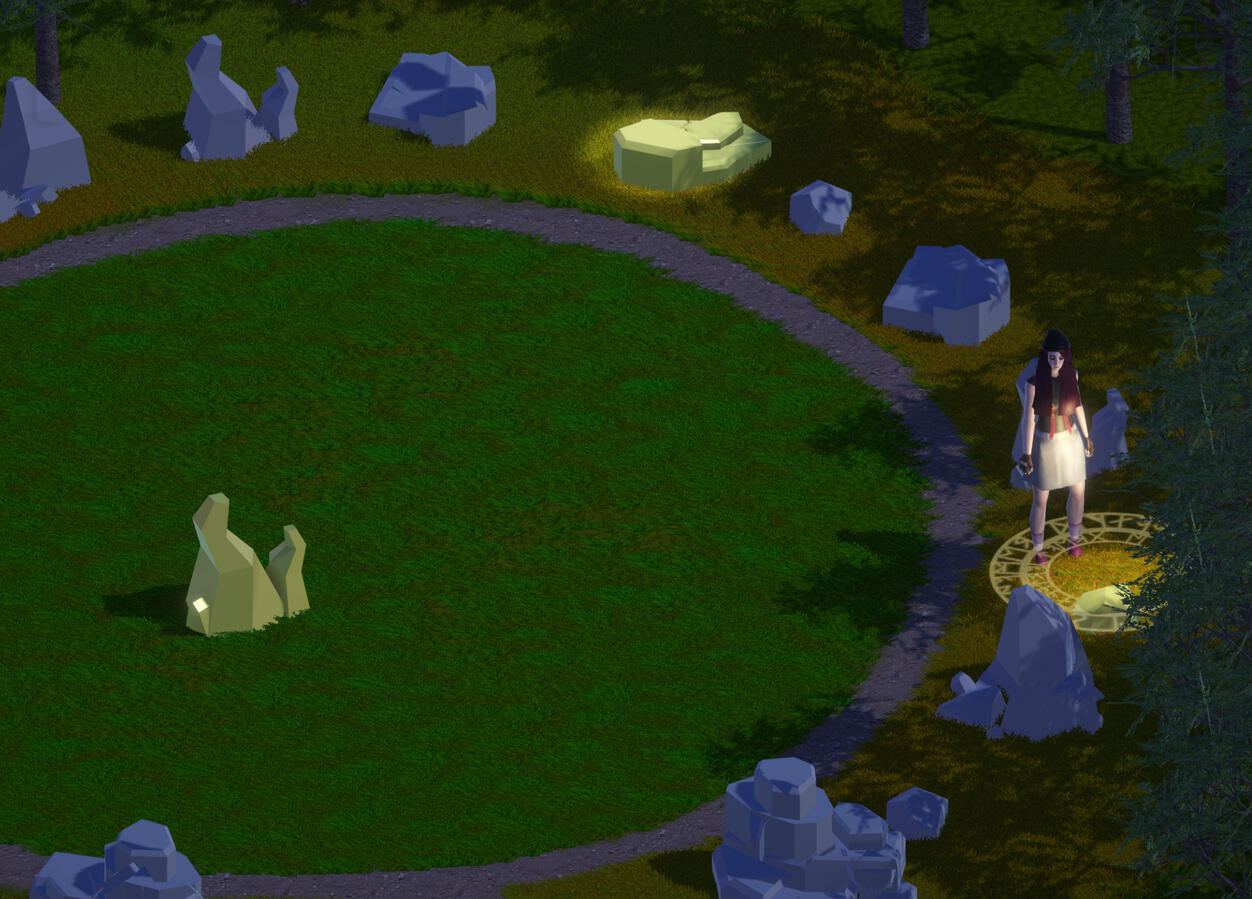
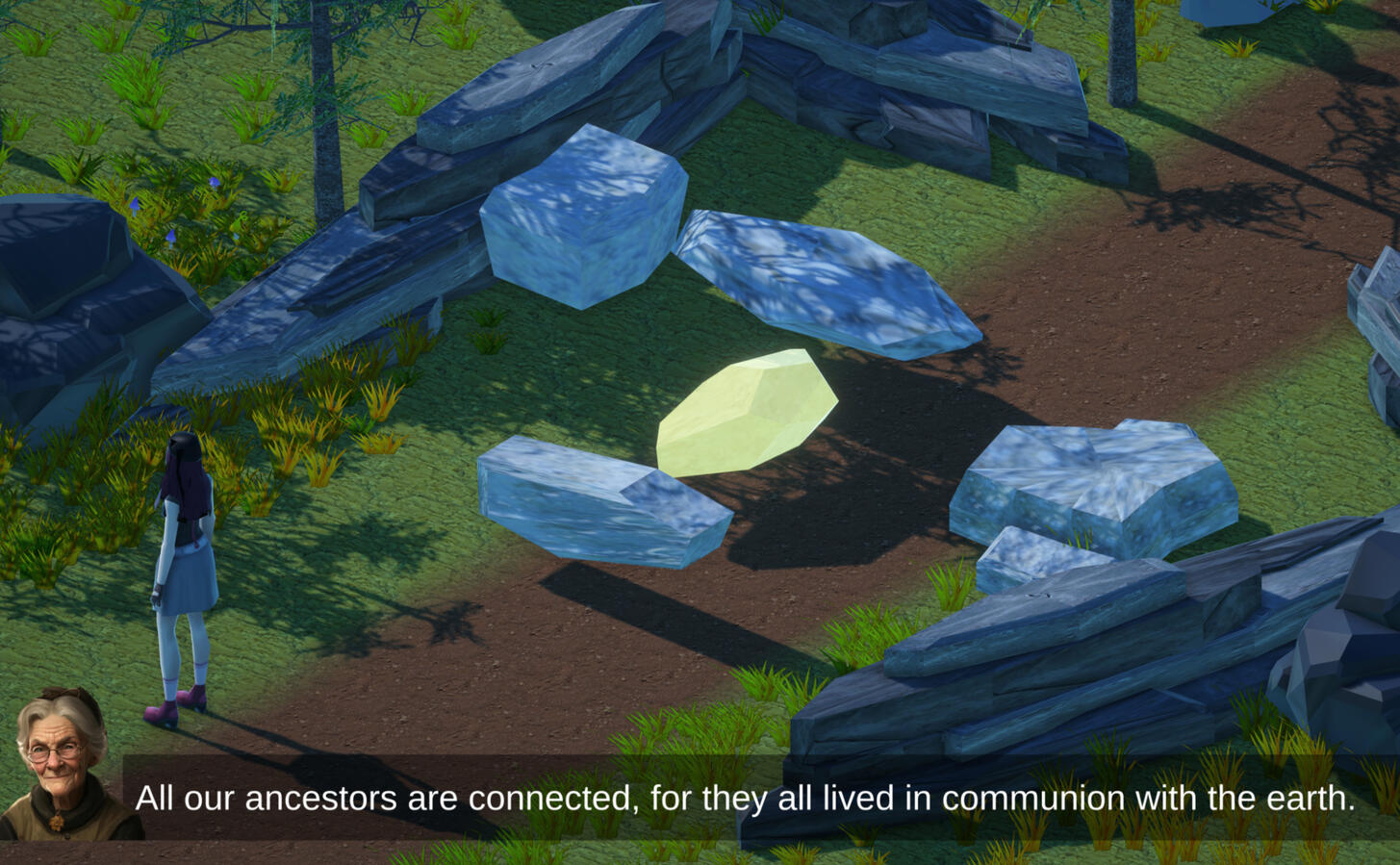
In Shared Roots: Wisdom of the Stones the player helps a young woman lay down roots in a new land. Through playful interactions, the player discovers the character's struggle to put her past behind her, lay down roots and build a life.RESPONSIBILITIES
• Assembled and led team of six
• Creative lead, developing narrative from original concept
• Collaborated across disciplines, adjusting narrative to serve overall gameflow
• Collaborated with composer and sound designer to develop game world
• Onboarded additional team members to enhance environment and UXDESIGN PRINCIPLES
*Address mental health and migration crises in accessible ways
*Integrate mechanic of problem-solving with narrative theme of overcoming setbacks
*Use ancient monuments to highlight shared experience across cultures
*Use character challenges to embolden player to confront their own
WonderWall
Genre: Mixed Reality Application for Meta Quest 3
Date: August 2024
Tools: Meta Quest 3, Unity, Meta Presence Platform, Logitech MX Stylus, Photon Engine
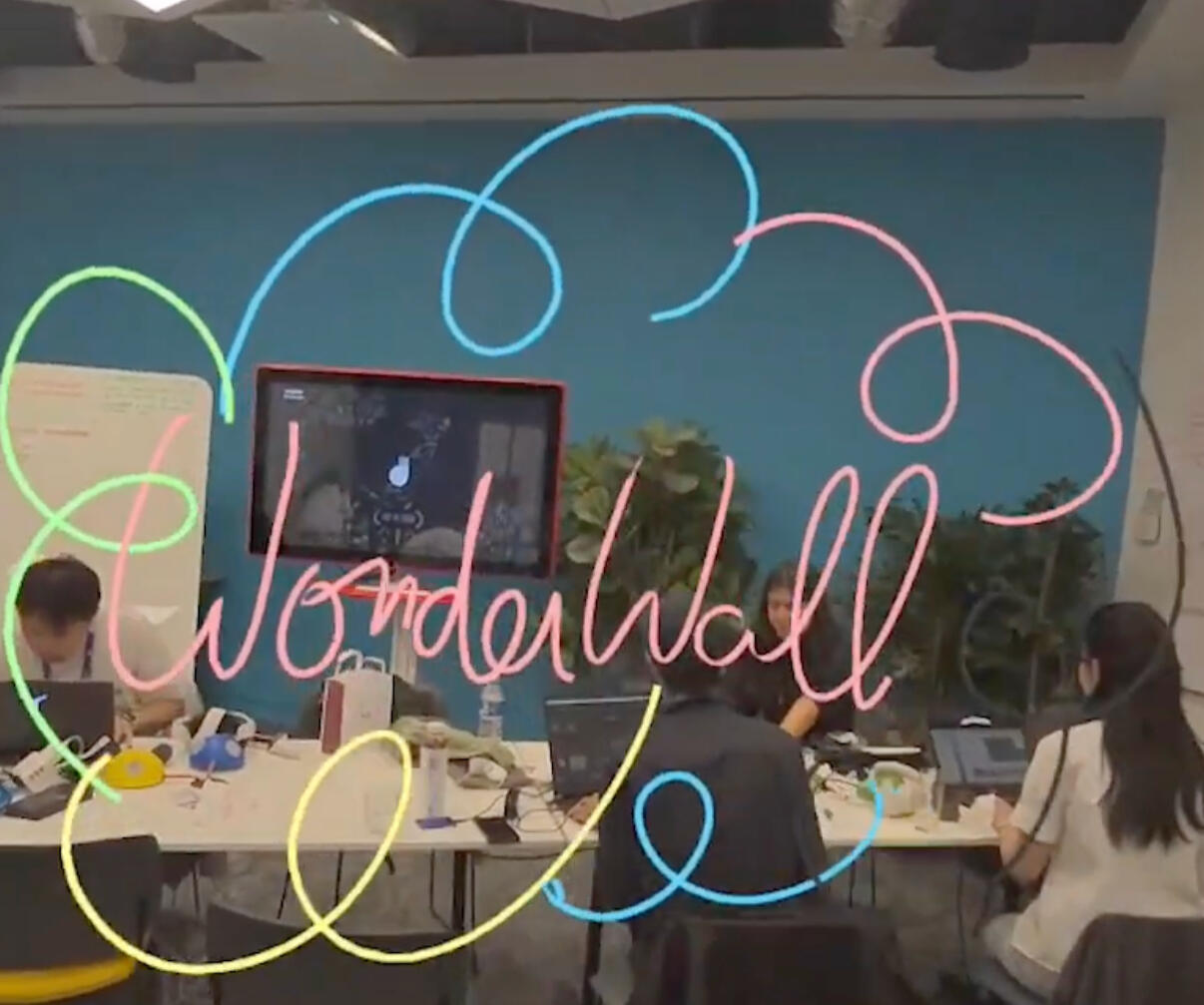
WonderWall turns any wall into a virtual studio by transforming digital files into spatial, interactive layouts that leverage the embodied intelligence of reaching, stretching, and navigating physical space to enhance memory, focus, and creativity. Drawing inspiration from the scene in A Beautiful Mind, investigation boards in cop procedurals, and the quasi-mystical Renaissance memory palace, WonderWall brings the “bigger picture” back into view for users navigating complex projects in constrained, screen-bound environments.Developed during the Global XR/AI Hack with support from Meta, Logitech and Photon engingeers, WonderWall was conceived not just as a productivity tool but an experimental site for blending narrative with function. It continues a thread of embedding poetic interference and speculative friction into functional systems to liberate creative embodiment. It reflects an interest in XR as a tool for closing the distance between idea and reality — bringing the imaginal into the embodied real by reshaping how users engage with the everyday. By folding fictional strategies into functonal design, WonderWall opens space for creative play and reflection within practical interfaces.N.B. Meta Quest 3 + Logitech MX Ink Stylus required for full functionality
Live
GLOBAL SYSTEM FAILURE
Genre: Multimedia Interactive Performance
Venue: Volksbühne-Berlin / Kin Festival Bristol / Oslo Architecture Triennial
Date: 2016-2019
Role: Konzept/Dramaturgie
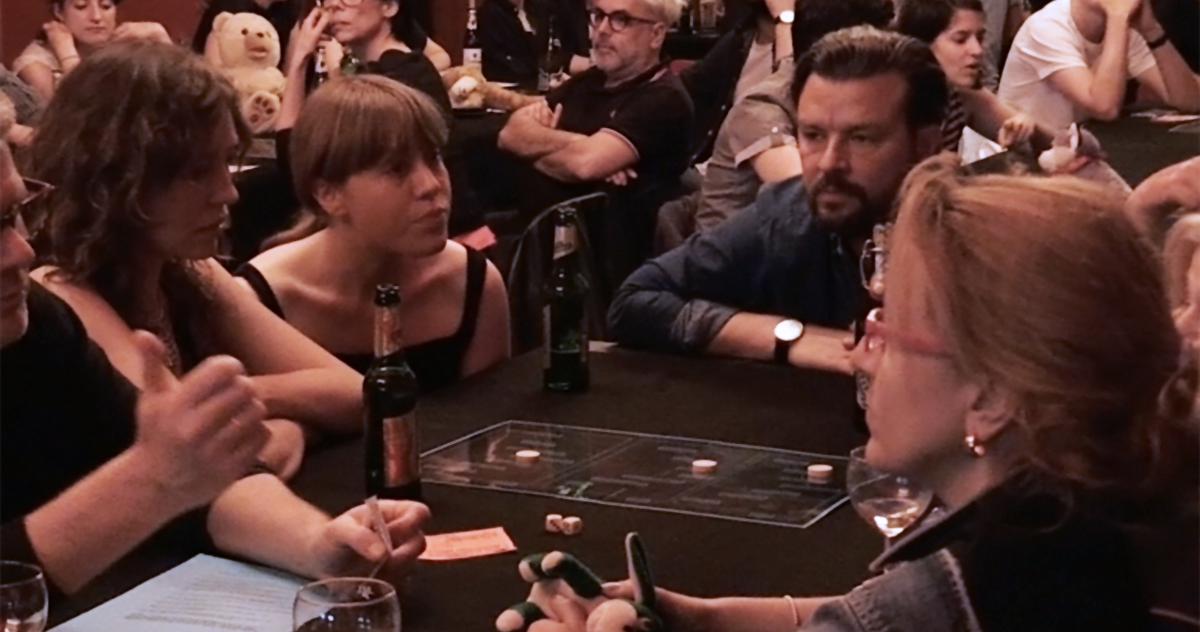
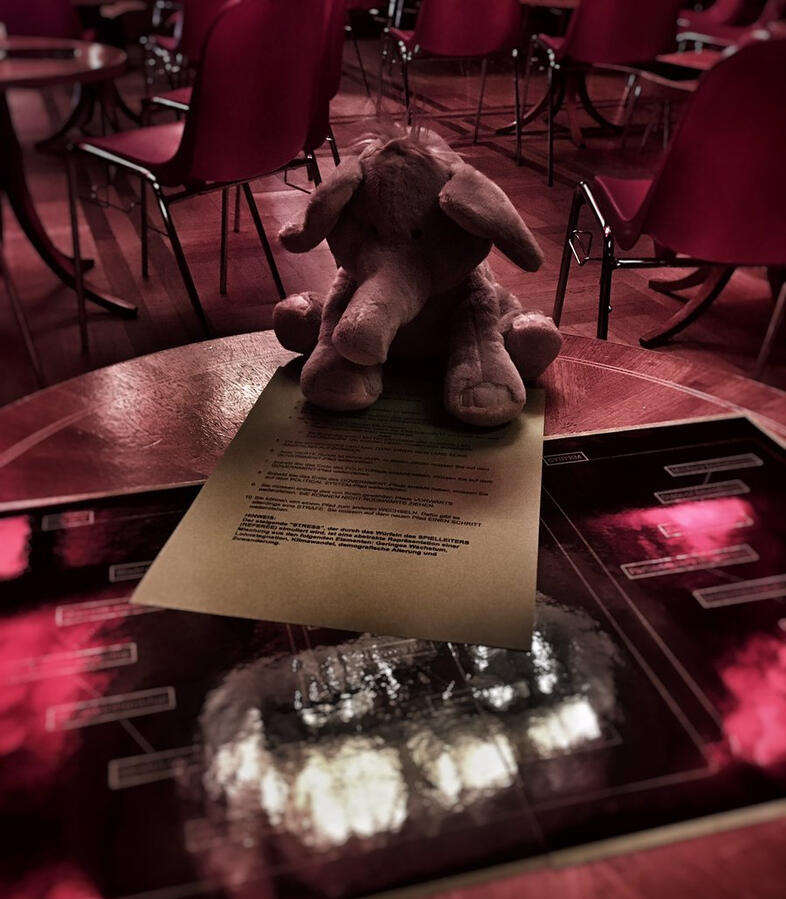
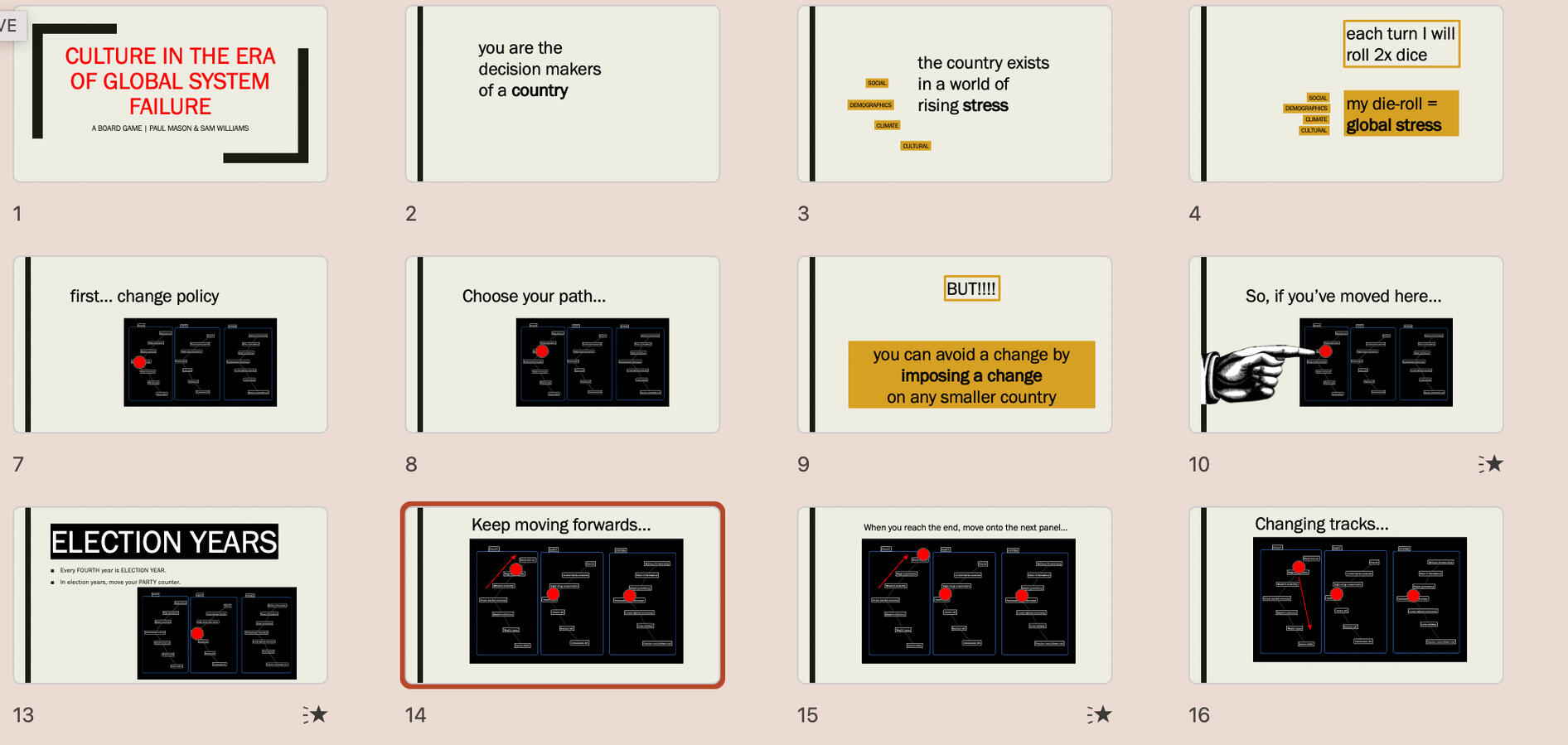
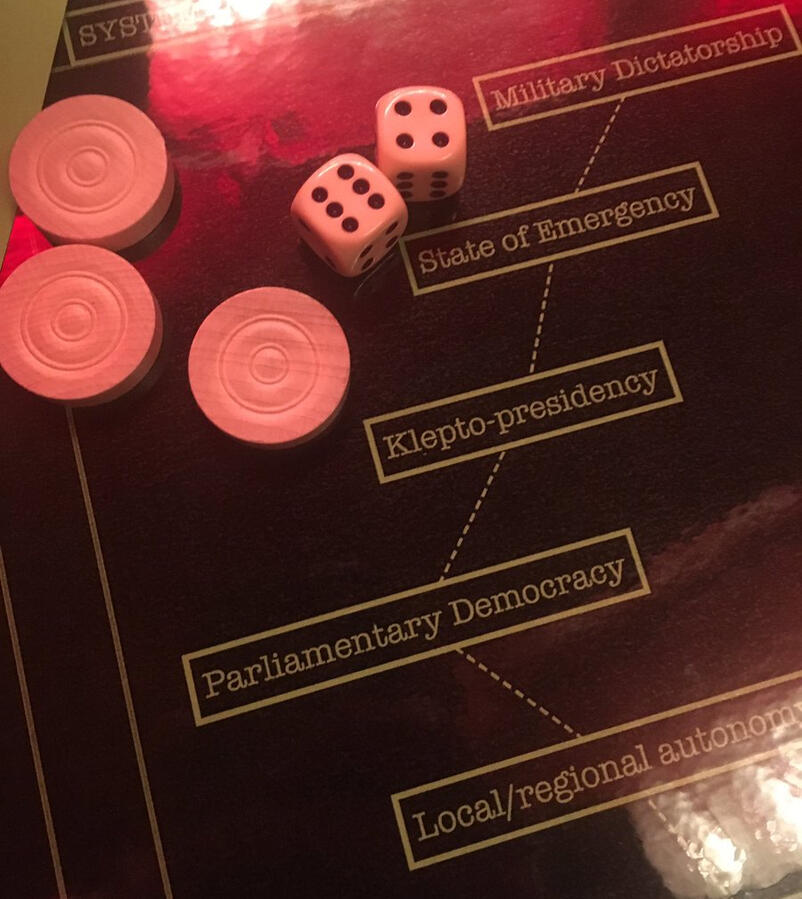
Global System Failure is an interactive megagame that guides participants through the breakdown of a rules-based global order. Created in collaboration with Channel 4 economics editor and author of Postcapitalism (2015), Paul Mason, the experience places audiences in teams representing fictional nations of varying scale. Through structured interaction, players navigate the choices they will face as electorates in the 2020s if economic growth fails to offset rising social, environmental, and geopolitical stress.The performance combines live-action roleplay, participatory and lecture-theatre to model the breakdown of post-war multilateralism and a new global order. Dialogue — within and between teams — is built into the experience, generating insight through immersion, conflict and negotiation. Playful design elements erect a ritualized creative context for political discussion freed from shibboleths.Developed in the mid-2010s as a speculative rehearsal for the global shifts we are now experiencing in the mid-2020s, Global System Failure is a container for embodied thinking and prefigurative politics. It was later commissioned to be turned into an app for the Oslo Architecture Triennial 2019.
CORRESPONDING WITH GHOSTS
Genre: THEATRE
Venue: Volksbühne-Berlin
Date: September 2018
OVERVIEW
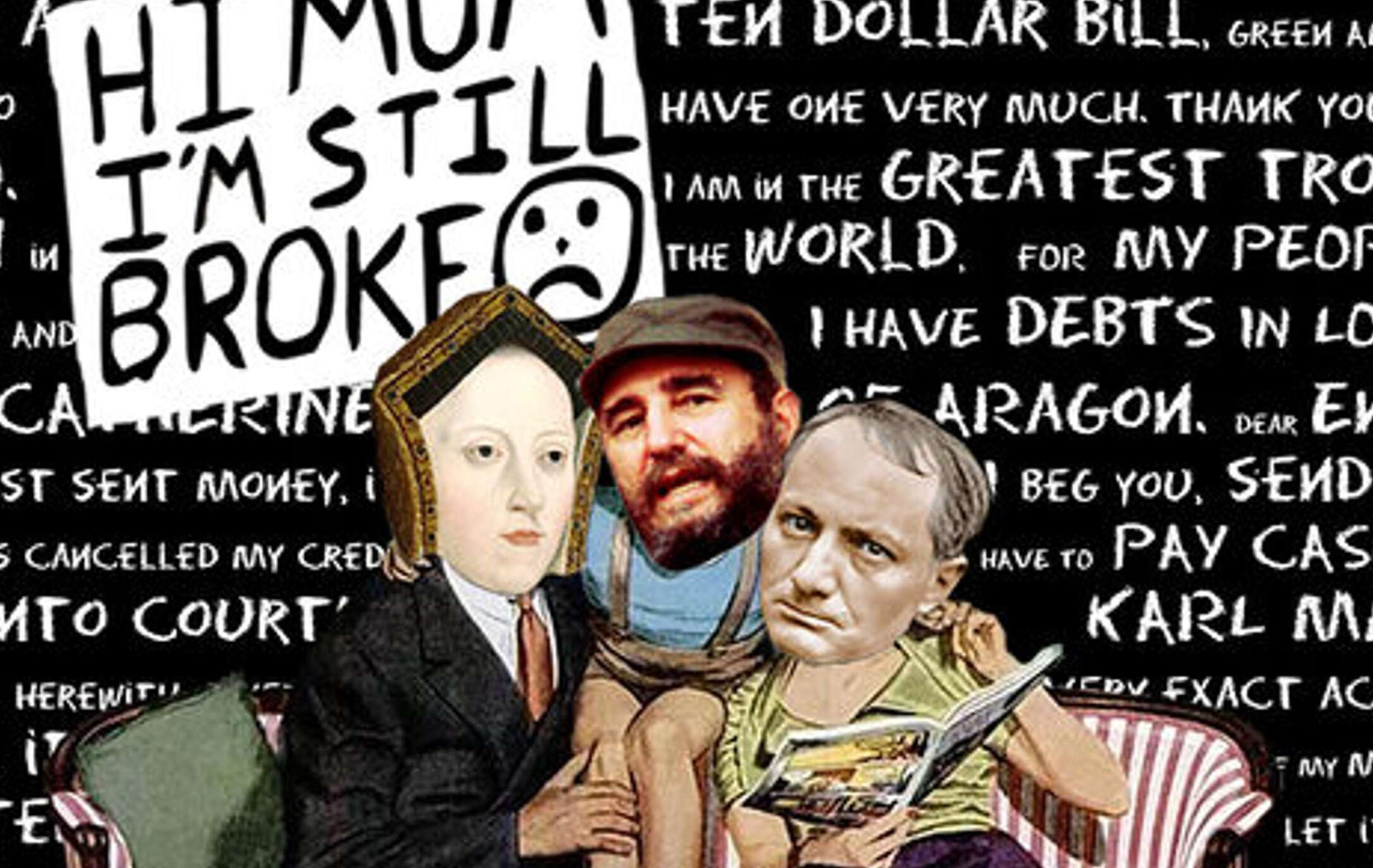
Corresponding with Ghosts was commissioned by philosopher and curator Armen Avanessian for Berlin's Volksbühne. The brief was to find a way of staging a collection of letters on the subject of debt ranging from 1456 to 1973, using theatre and fiction to make sense of the present moment by allowing voices from the past to 'speak' to each other.RESPONSIBILITIES
* Brokered partnership between Volksbühne Berlin and Royal Central School of Speech and Drama
* Led year-long writer's room for MA students
* Compiled and rewrote student script for professional production
* Devised narrative framework for characters from different eras to interact
* Collaborated with Musical Director to develop musical interludes
* Worked bilingually to run workshops for UK students with German ensemble
* Managed collaboration across departments of RCSSD and VolksbühneDESIGN PILLARS
* Tell an origin story of the modern era
* Turn historical material into dramatic material
* Make ideas approachable through emotional storytellingPROGRAMME NOTES
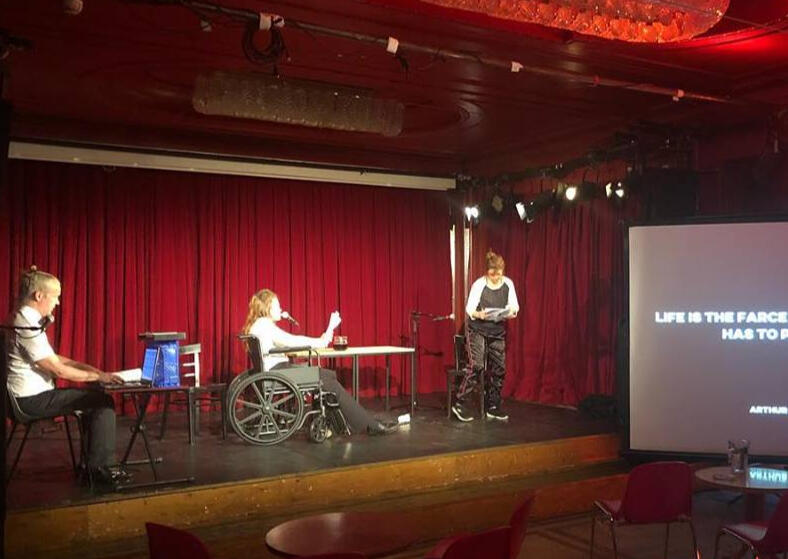
Generational battlegrounds. Class war, high ideals and dirty money - but never enough of it. From the birth of mechanical reproduction in 1457 to the death of the gold standard in 1973, Corresponding with Ghosts is an experiment in staging modernity. Performed by Anne Tismer and Paula Kober with music by Sir Henry.
UNMASKED
Genre: THEATRE
Venue: Deptford X / Camden People's Theatre / Galleri Antares
Date: 2014-2016
Awards: Saari Fellowship, Highly Commended (Deptford X) Selection: CPT Festival 2016
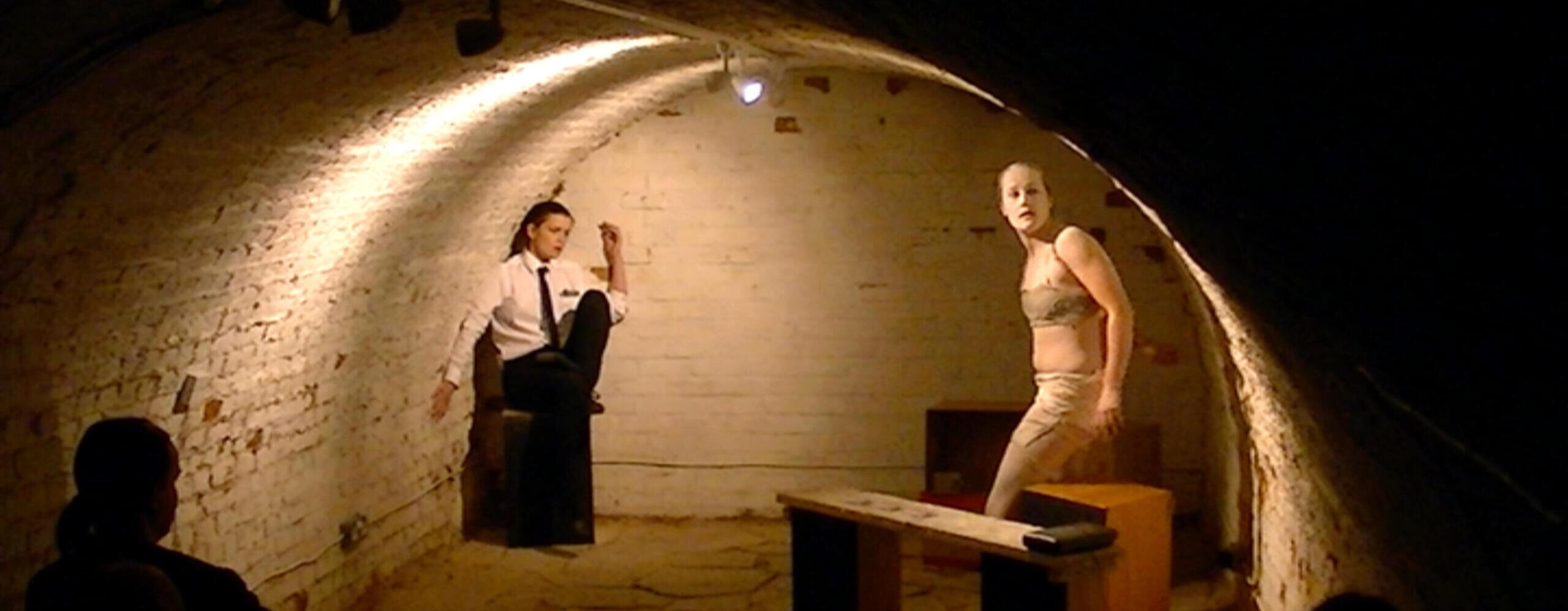
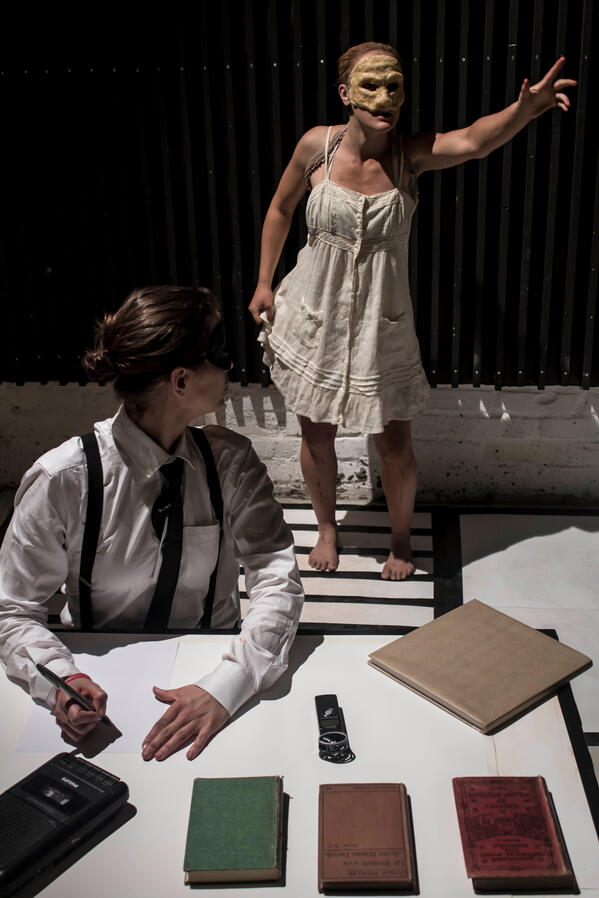
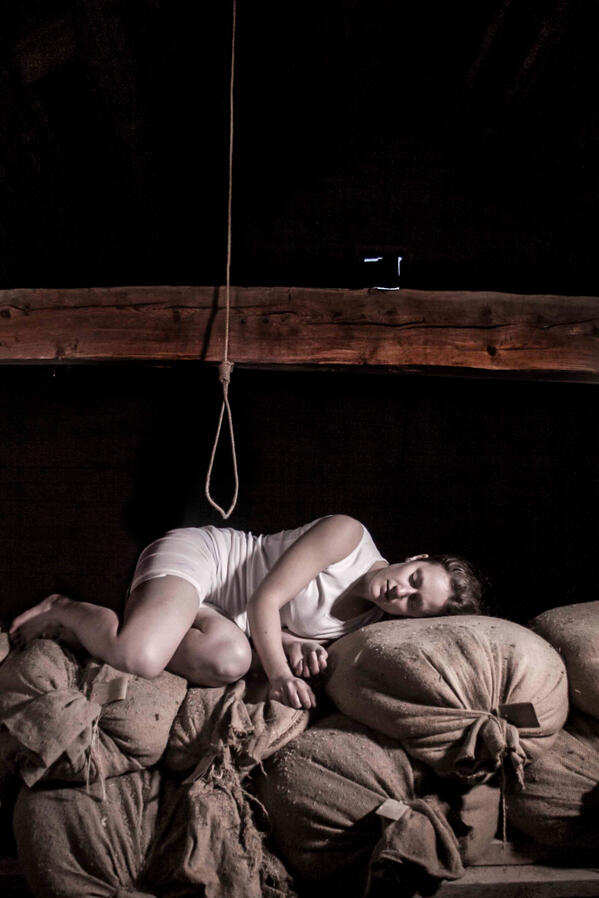
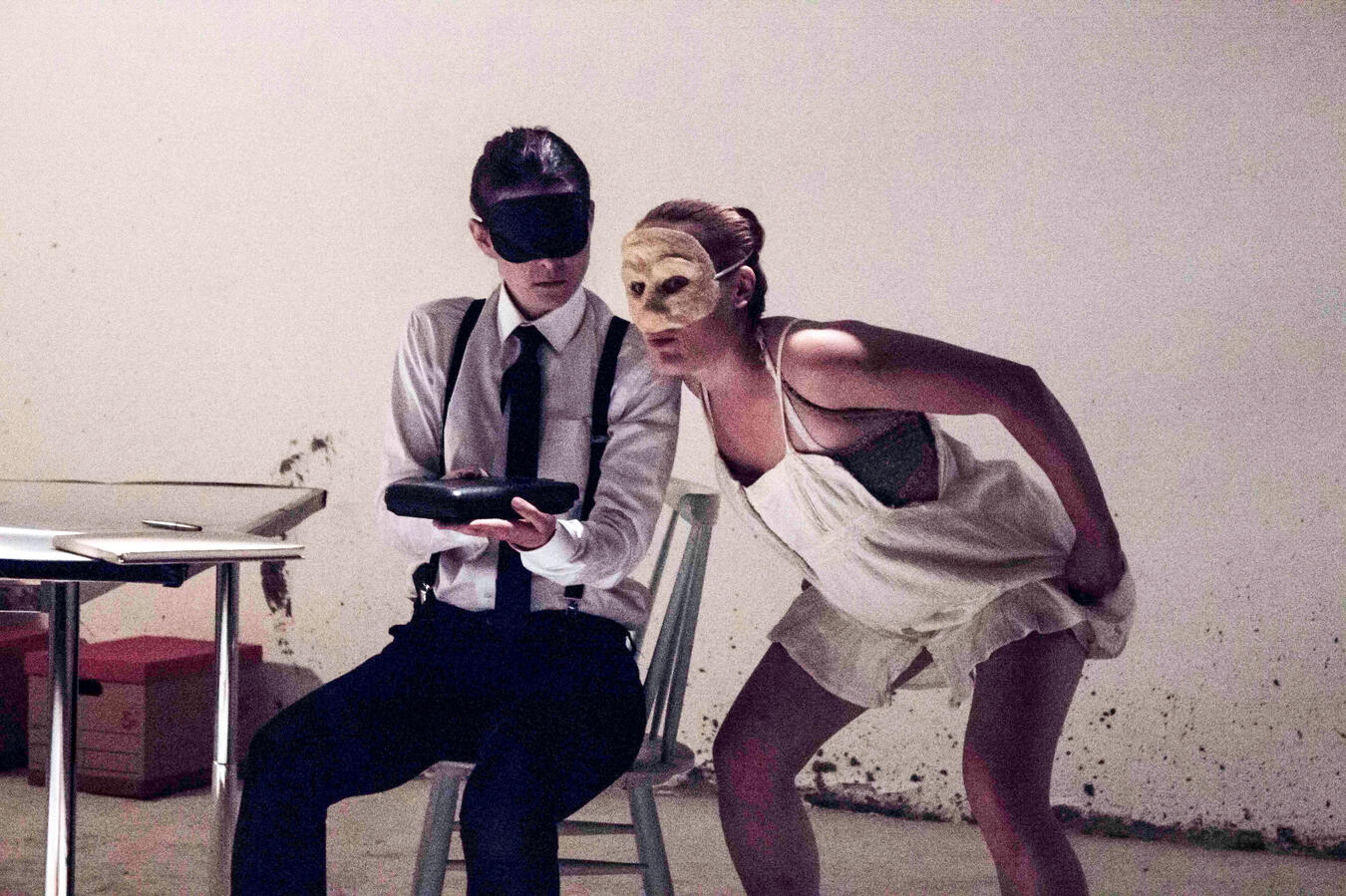
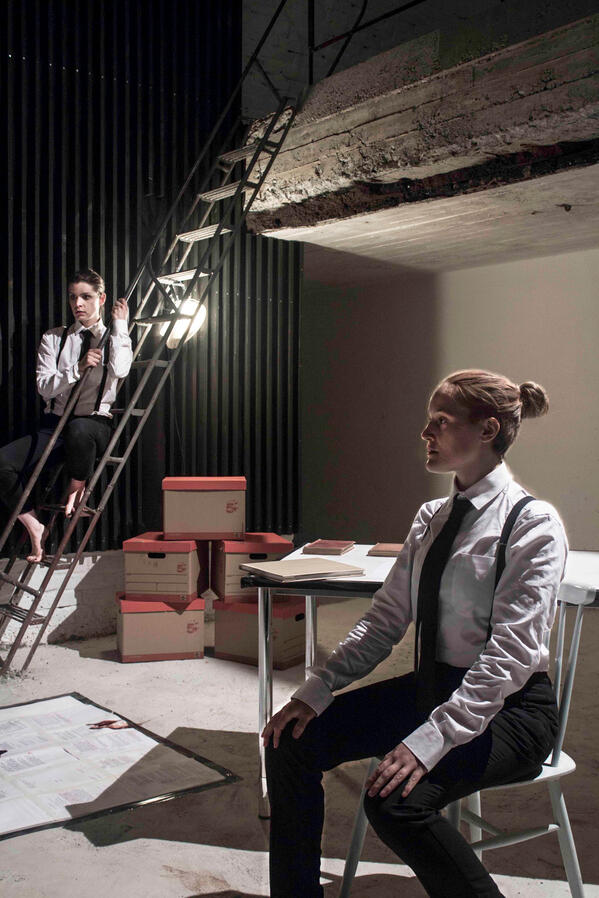
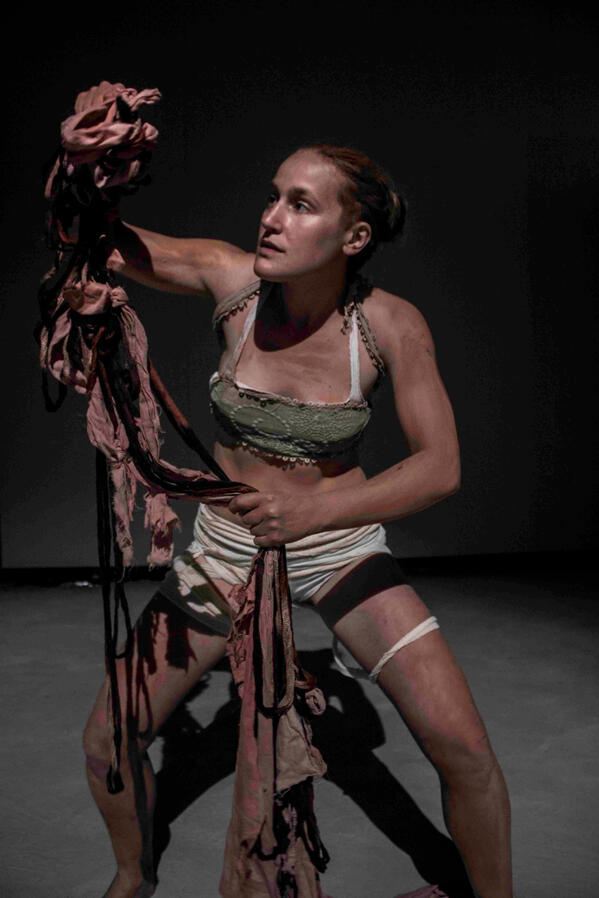
Unmasked is an adaptation of the Kalevala - a 19th Century epic poem based on an ancient oral tradition and the inspiration for Tolkien's Lord of the Rings. The adaptation focuses on the journey of three female characters — combining figures from the Kalevala with real women throughout time to distil persistent archetypes of female experience. Beginning their journey in Finnish myth, they travel to the moment of their literary capture in the 19th Century and disintegration in the 21st.Created in collaboration with physical theatre artist Philippa Hambly, Unmasked explores what happens when primordial forces meet modernity and where cultures go to die. It is based on two months of fieldwork with rune singers, tradition-keepers, and environmental and indigenous activists - with the support of the Finnish Folklore society, Juminkeko Foundation and a €20,000 Kone Foundation Saari Fellowship, and an Antares Gallery residency. A two-week run at Deptford X Festival resulted its selection for a festival commendation: it was described by the festival director as 'the best thing I've seen at Deptford X in ten years'.PRODUCTION NOTES
“If we are to remember, we must take things down. Record." Can truth be recorded? An archivist investigates. Women, contemporary and ancient - prisoners, mystics and storytellers - arrive to testify. But are they telling the truth? Or are their stories just another myth? Who is recording? And why? UNMASKED uses cultural and historical crosscurrents of magic and myth, history and violence to stage a contemporary adaptation of Finnish national epic, The Kalevala.
Why It's Kicking Off Everywhere
Genre: Interactive multimedia theatre w/live & online participation + live broadcast
Date: 2016 - 2017
Venue: Young Vic / BBC 2 - Performance Live
Role: Script Editor and Interactive Dramaturg
OVERVIEW
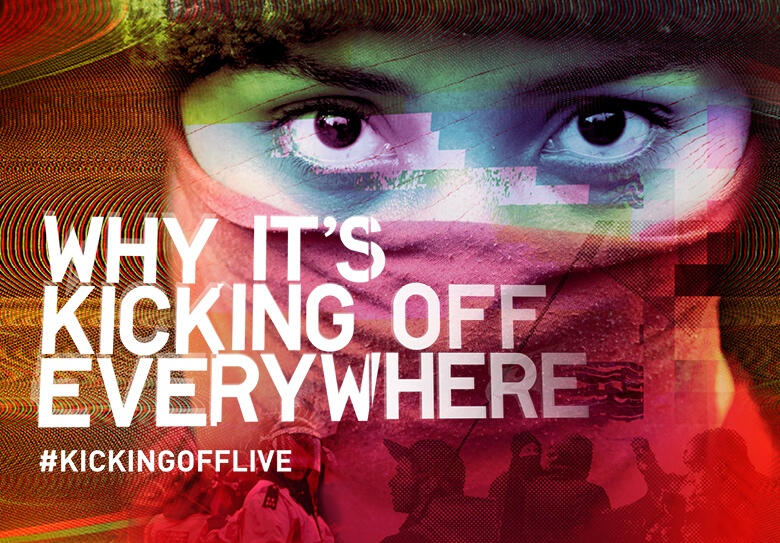
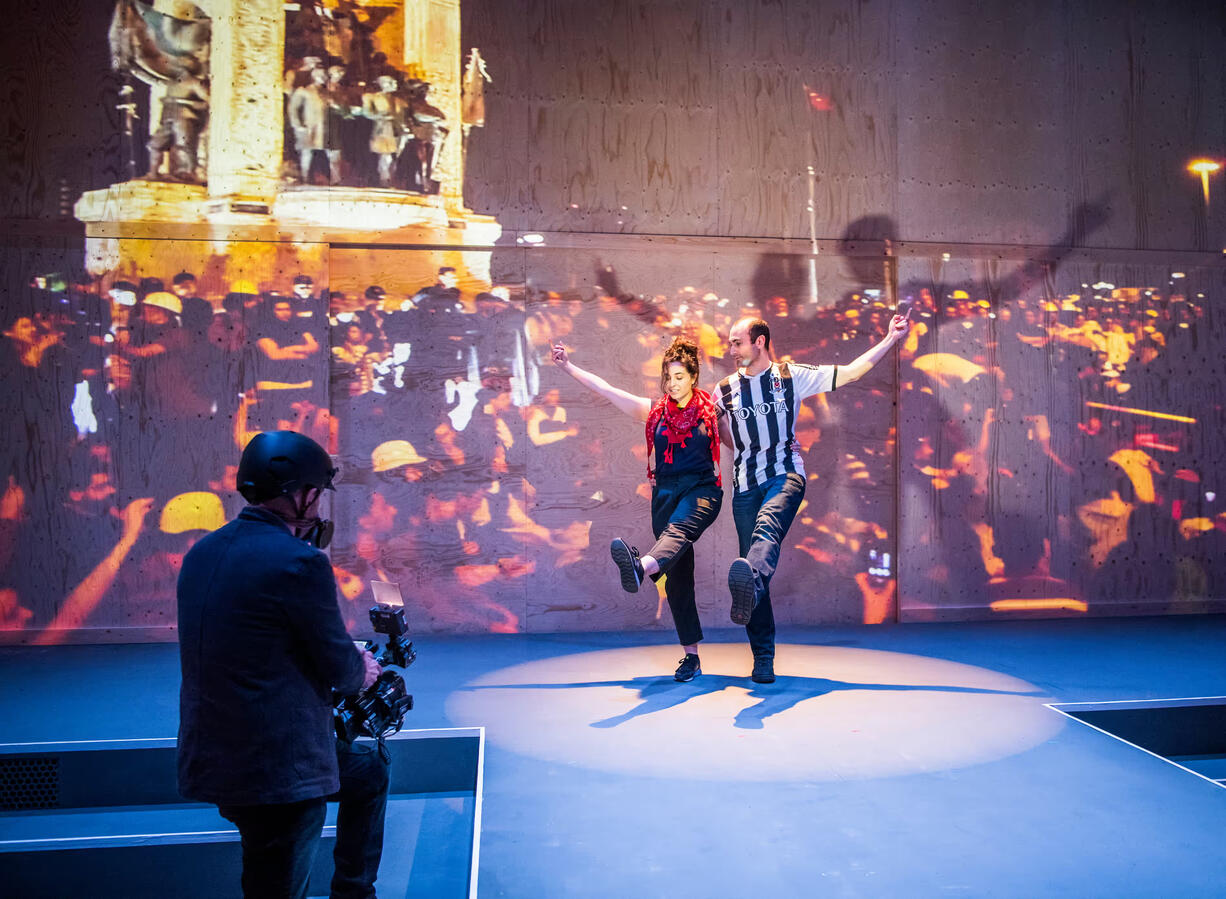
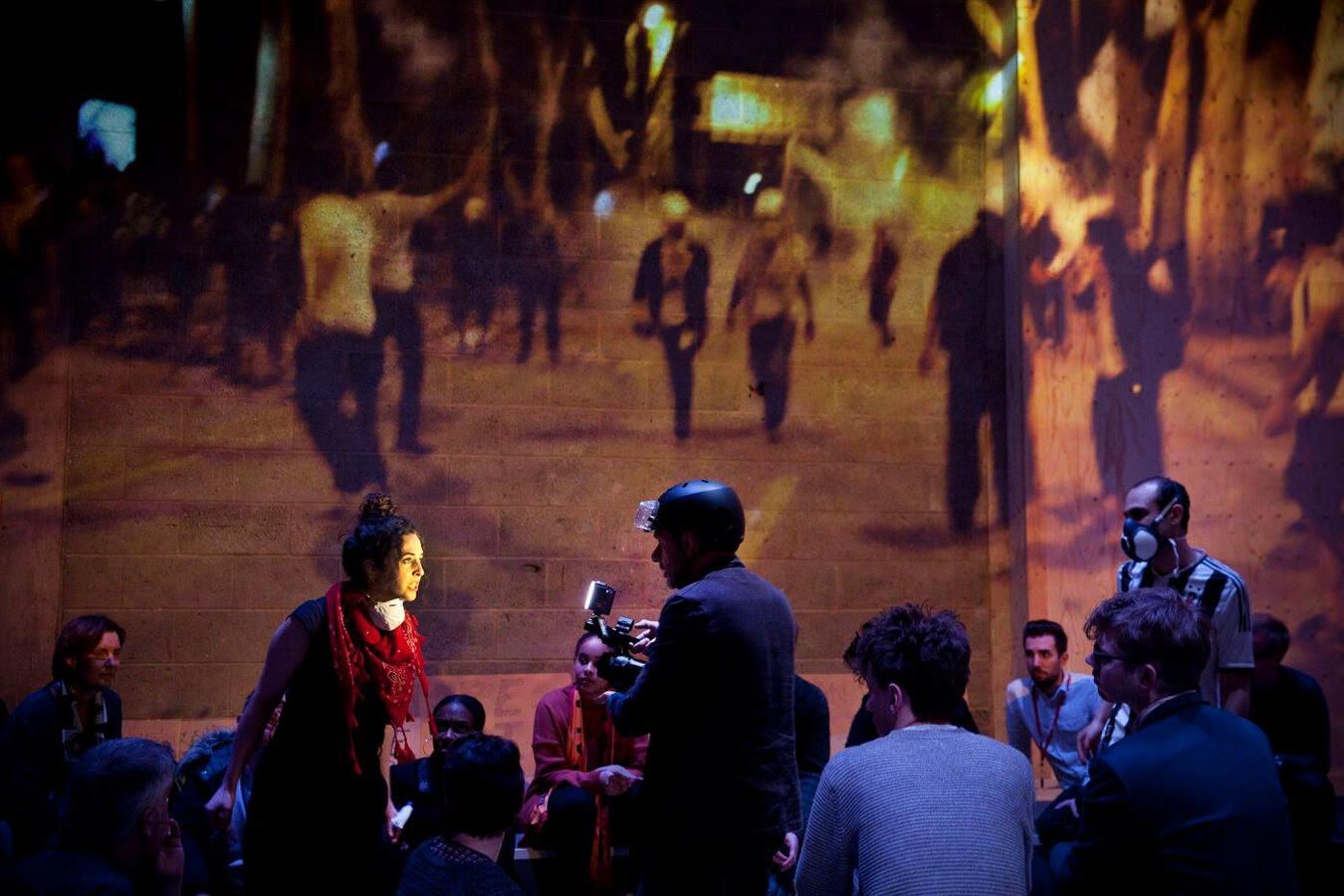
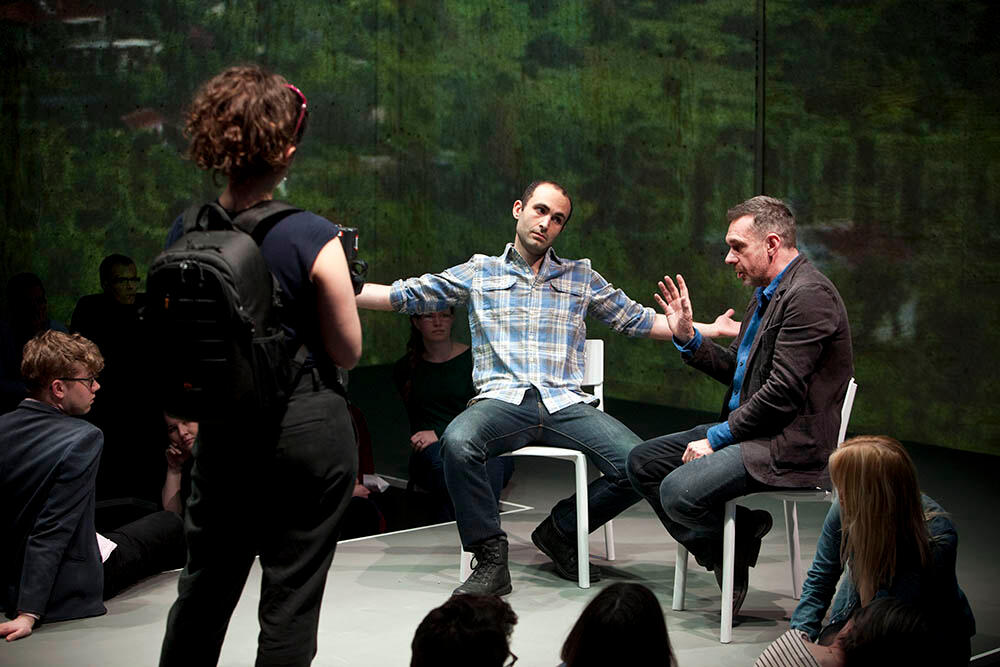
Why It's Kicking Off Everywhere is an immersive multimedia performance about how the optimistic revolutions of the 2010s led to the rise of authoritarianism around the world. It was performed at The Young Vic and filmed and broadcast for BBC 2's Performance Live series.RESPONSIBILITIES
*Consultant on narrative framing to integrate media, online and live performance interactions
*Script editor, providing recommendations and edits to successive drafts
*Rehearsal room presence, advising on the effective integration of immersive elementsDESIGN PRINCIPLES
* Stage popular uprisings for audience to feel they are 'there'.
* Balance immersion with conveying content to inform discussion
* Use multimedia performance to reveal lived reality behind media spectacle
* Integrate real-time online participation into performance
A Public Exhibition
Genre: Multimedia Interactive Theatre / Performance Art
Date: December 2012
Venue: Royal Central School of Speech and Drama
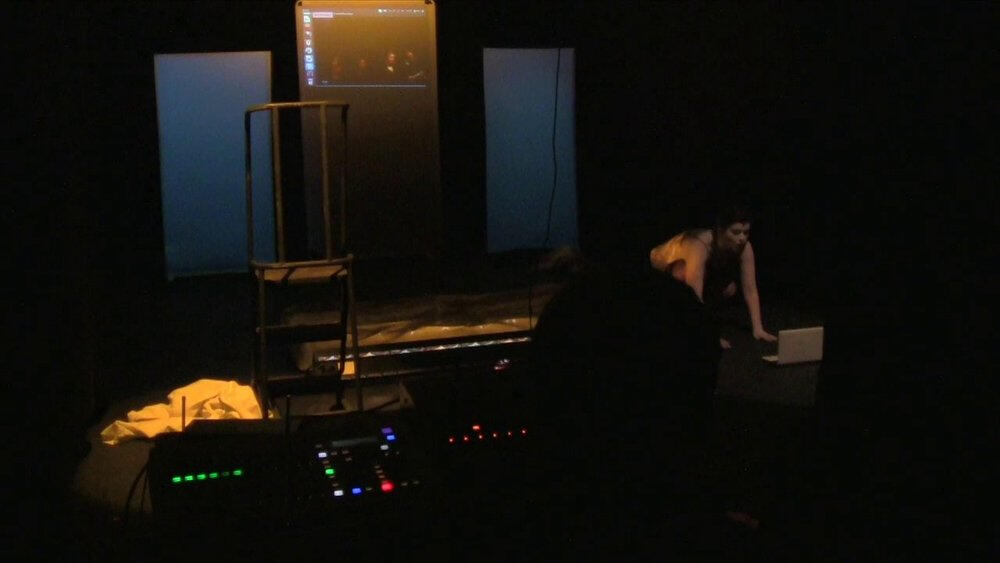
This performance explores the relationship between the mediatization of everyday life and commodified relations between bodies.With a script based on interviews with online sex workers and the men who solicit their services, stories of individual lives became a starting point for exploring the archetypal forces at work in mediatized transactions online. The interactive scenography uses live feed technology to implicate the audience as consumer.The performer executes three composite characters - the ferryman/janitor, Aletheia/the mediator, and the camera/girl. Video feeds of audience, performer and their interactions are projected onto three screens throughout the performance. Each screen becomes 'home' to one of the characters and their belongings.
The Scourging
Genre: Medientheater*
Date: June 2011
Venue: Hebbel-am-Ufer: HAU 3
Role: Dramaturg
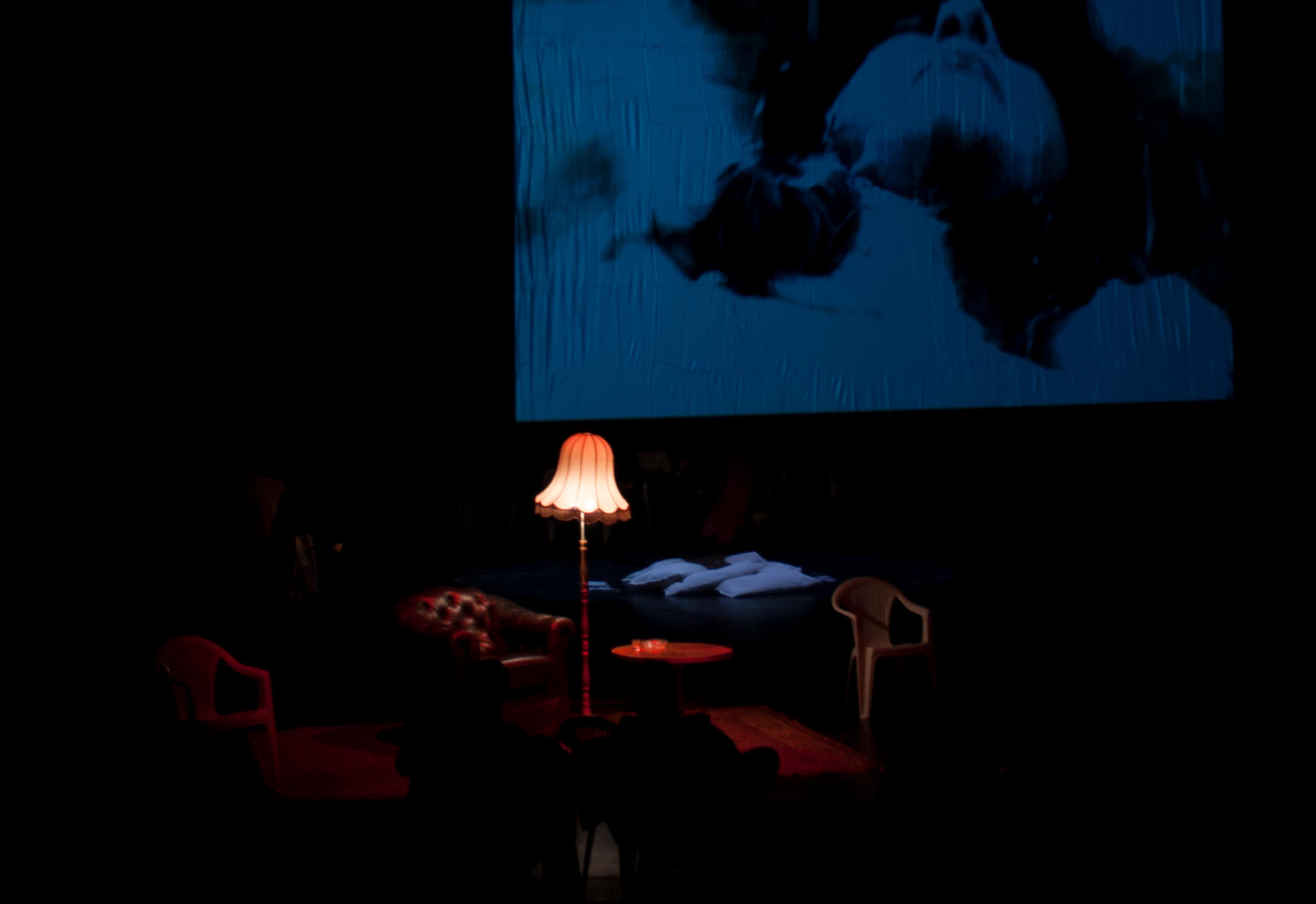
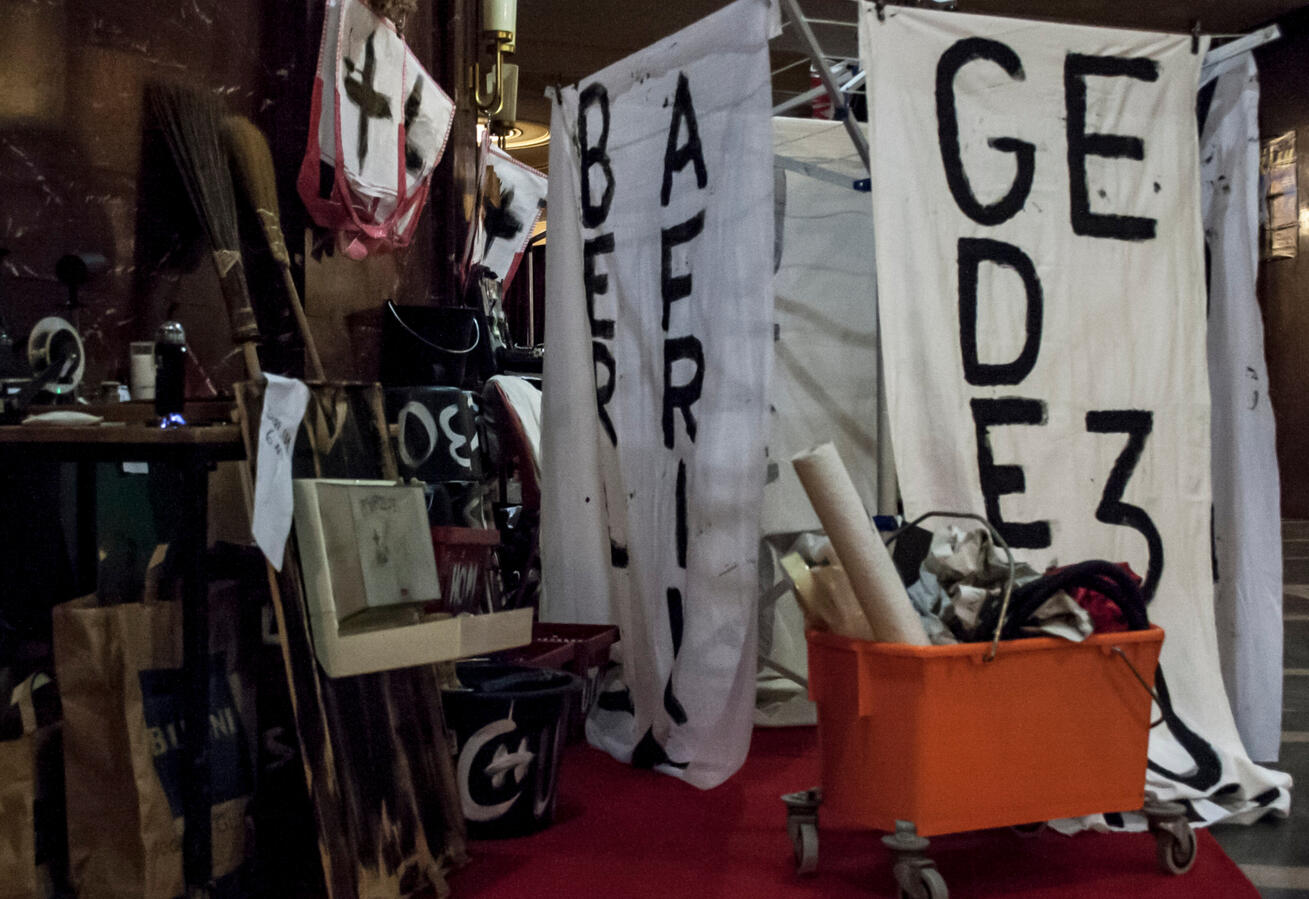
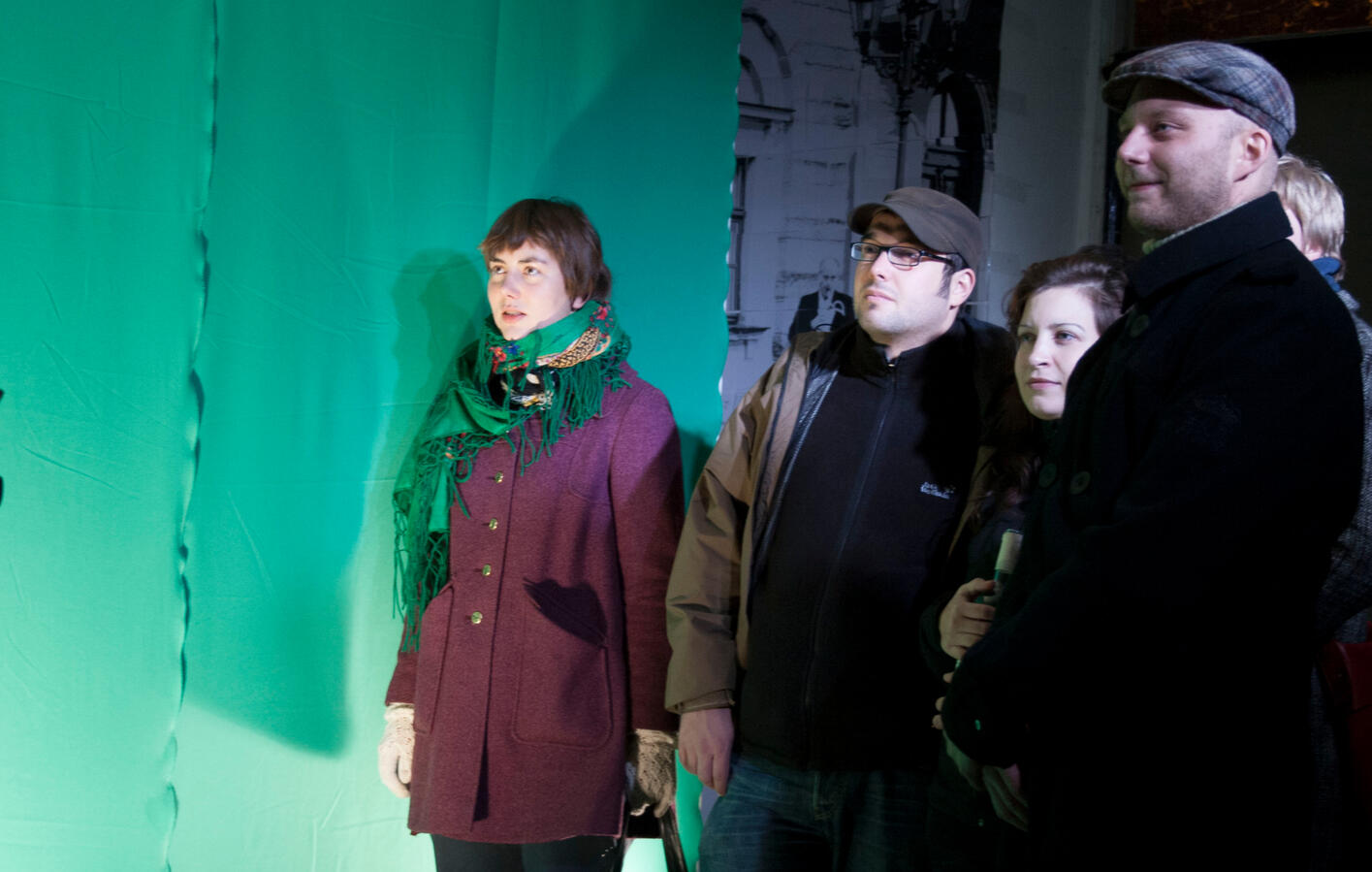
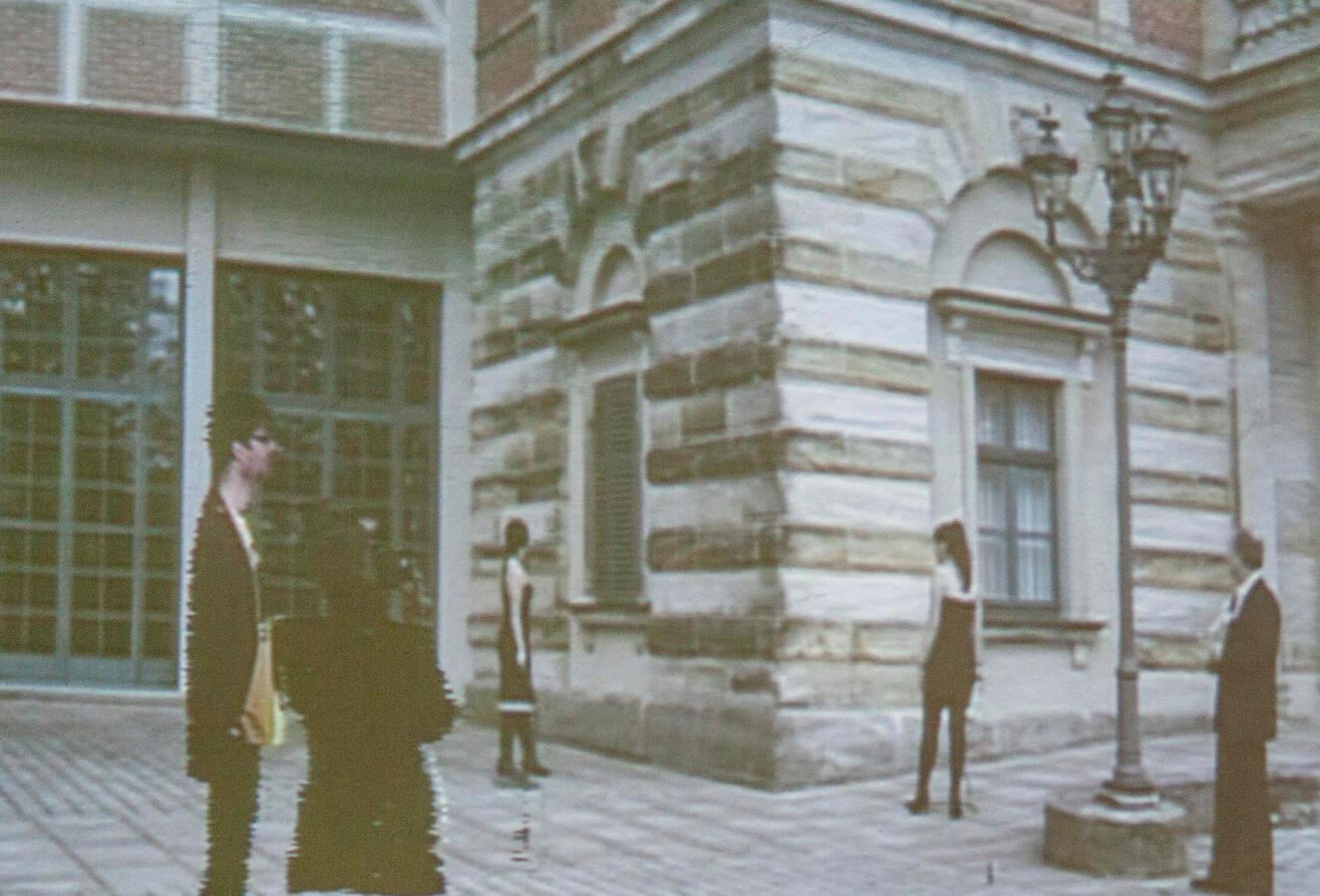
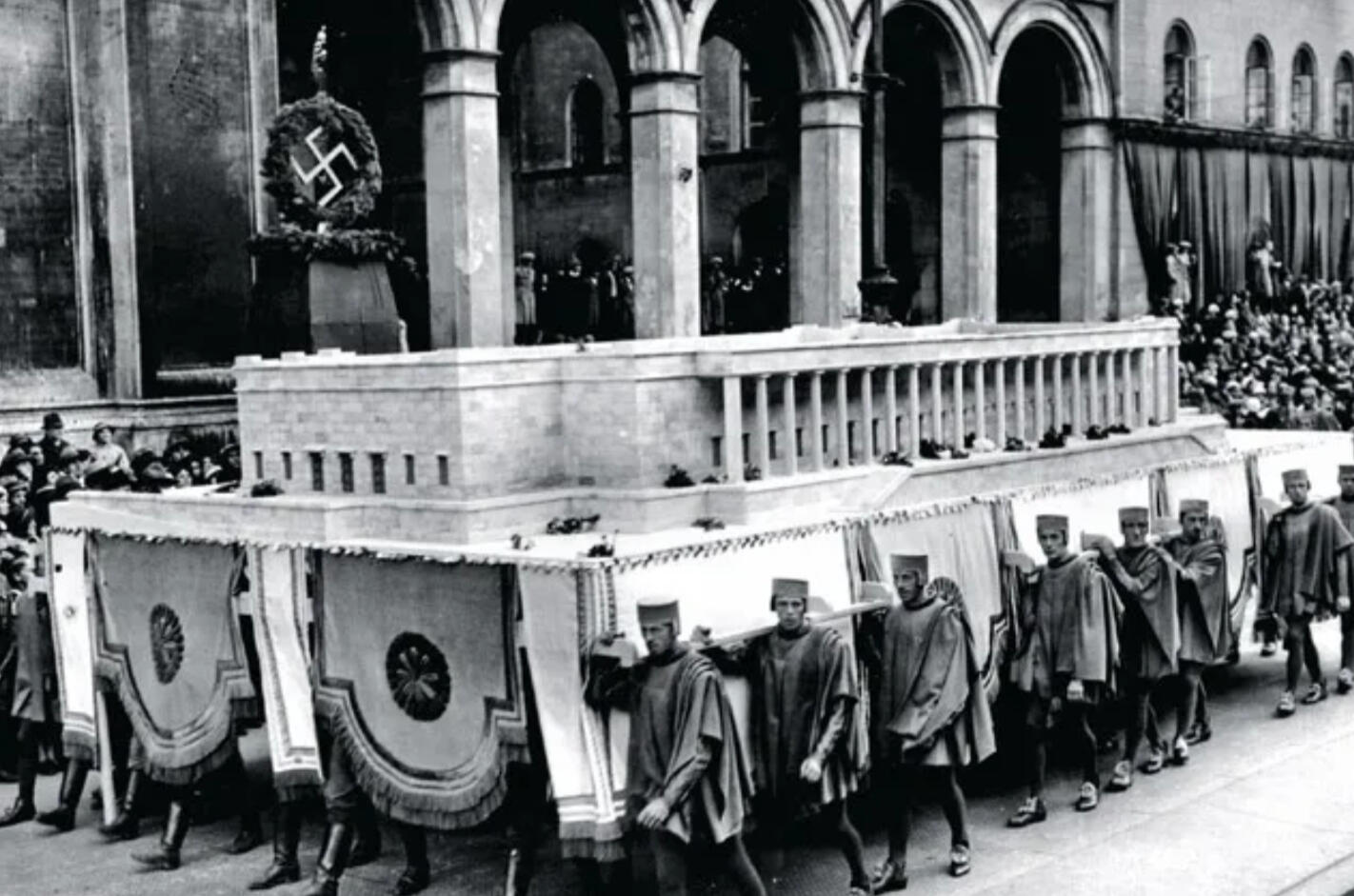
Die Auspeitschung (The Scourging) was commissioned by Matthias Lilienthal (Theater am Hebbel-am-Ufer) for a memorial to the theatre director and TV personality Christoph Schlingensief. Medientheater is a German-language artform that emerged in 90s-00s Berlin — shaped by lived underground subcultures, hacktivism, and techno scenes as well as postdramatic theatre. Unlike the functional scenorapghies of 'multimedia theatre' Medientheater treats media technologies as co-performing presences: alive, agentive and encoded with histories, forces, and relationships. The action was made with a fictional collective assembled from the milieu around Humboldt University's Medientheater and leading media theorist Friedrich Kittler.Die Auspeitschung was a ritual scourging of Bayreuth — the opera house built-to-design by Wagner. Its symbolism of the action was easily legible to Berlin subcultures who 'attended' the scourging using screen technology. Schlingensief had said that working at Bayreuth was so traumatic it would surely give him fatal lung cancer, of which he died just two years later. The performance references the scourging of Savonarola’s bell. After his death, the bell was paraded, whipped, and mocked through the streets to cleanse it of the remnants of Savonarola's authority. Die Auspeitschung sought a similar expiation: not just of the harm wrought on Schlingensief but of Wagner's totalizing aesthetic — seen by many artists and thinkers in Germany as having laid the groundwork for fascism and stalled the evolution of art.From the festival programme:
“Just as meaning and sorrow are manifested in different eras as different feelings every person must encounter in their own way, so too are punishment, mourning and salvation. Visitors from the future can cut themselves into the video, and so travel back in time to take part.”
words
ECOREALISM : A TRILOGY
Genre: Essay
Date: 2018-2019
Outlet: International Association of Theatre Critics (AICT), Tribune, Howlround
These essays — published in HowlRound, Tribune, and the Journal of the International Association of Theatre Critics — combine reportage and art writing. Together, they form a loose tryptich that explores the present moment of cultural upheaval: diagnosing how the breakdown of inherited forms and institutions (HowlRound) releases atavistic forces; the new artforms and approaches to criticsm to which those forces give rise (Critical Stages Journal), and exposing revanchist suppression emerging formats in favour of forms of art and politics that no longer describe reality (Tribune). Reconciling materialist and pre-modern perspectives with Indigenous and ecological thinkers, these essays examine entangled political, cultural, and planetary crises — and propose new artforms that scaffold more alive, relational and storied ways of being in the world.
WORKING WITH BRECHT: THEATRE FOR A NEW AGE
Genre: Essay
Date: 2018-2019
Outlet: ECIBS - Electonic Communications of the International Brecht Society / Literaturforum im Brechthaus
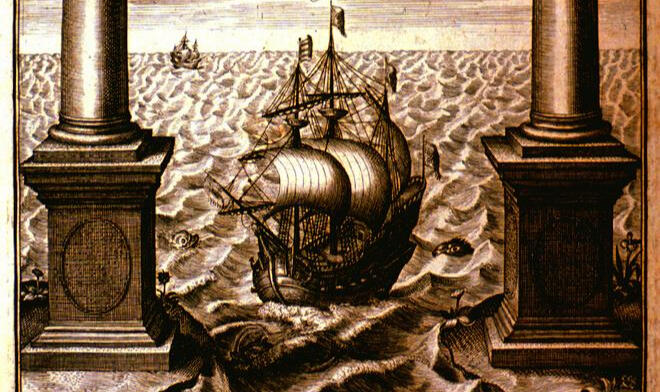
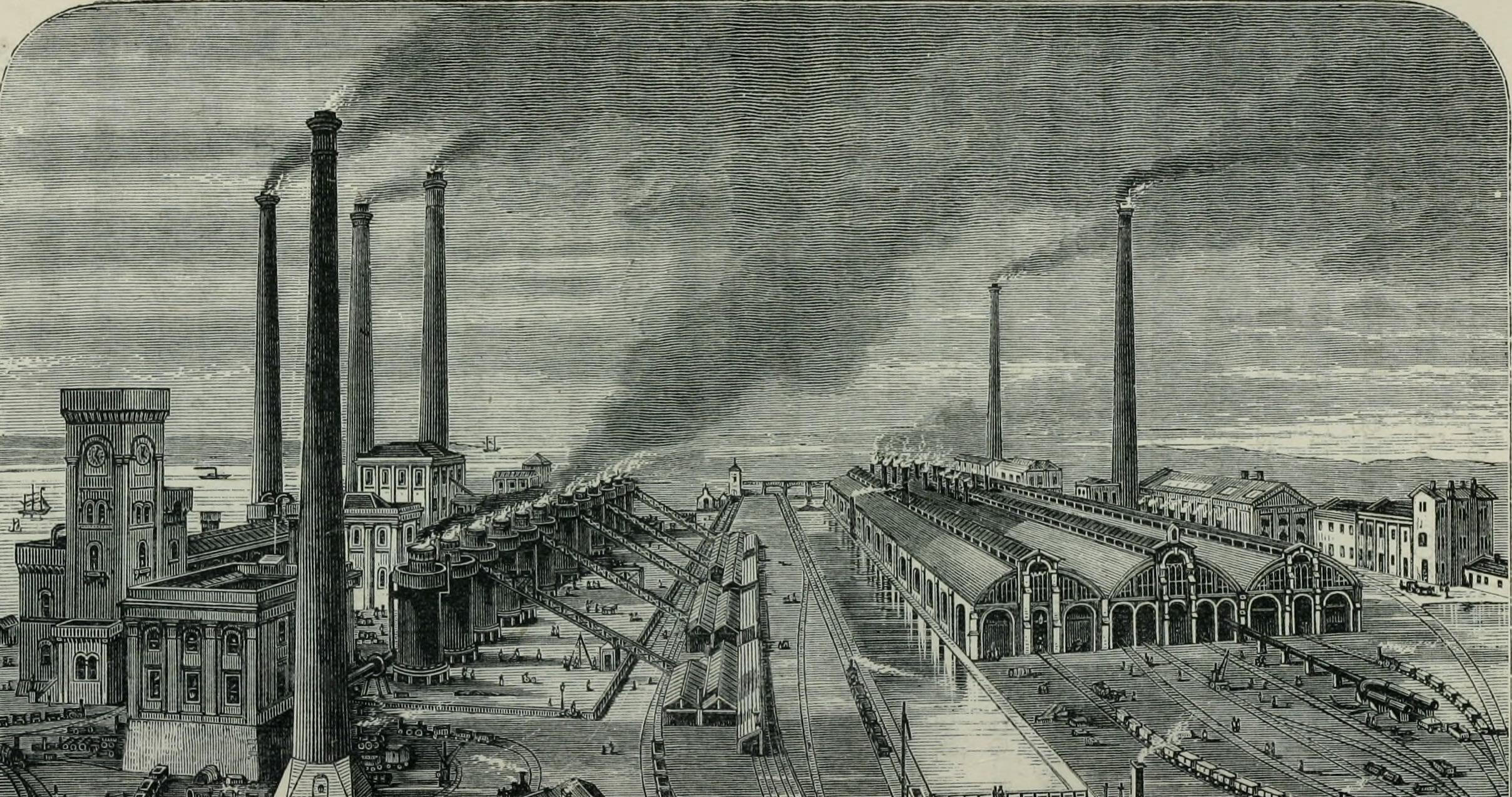
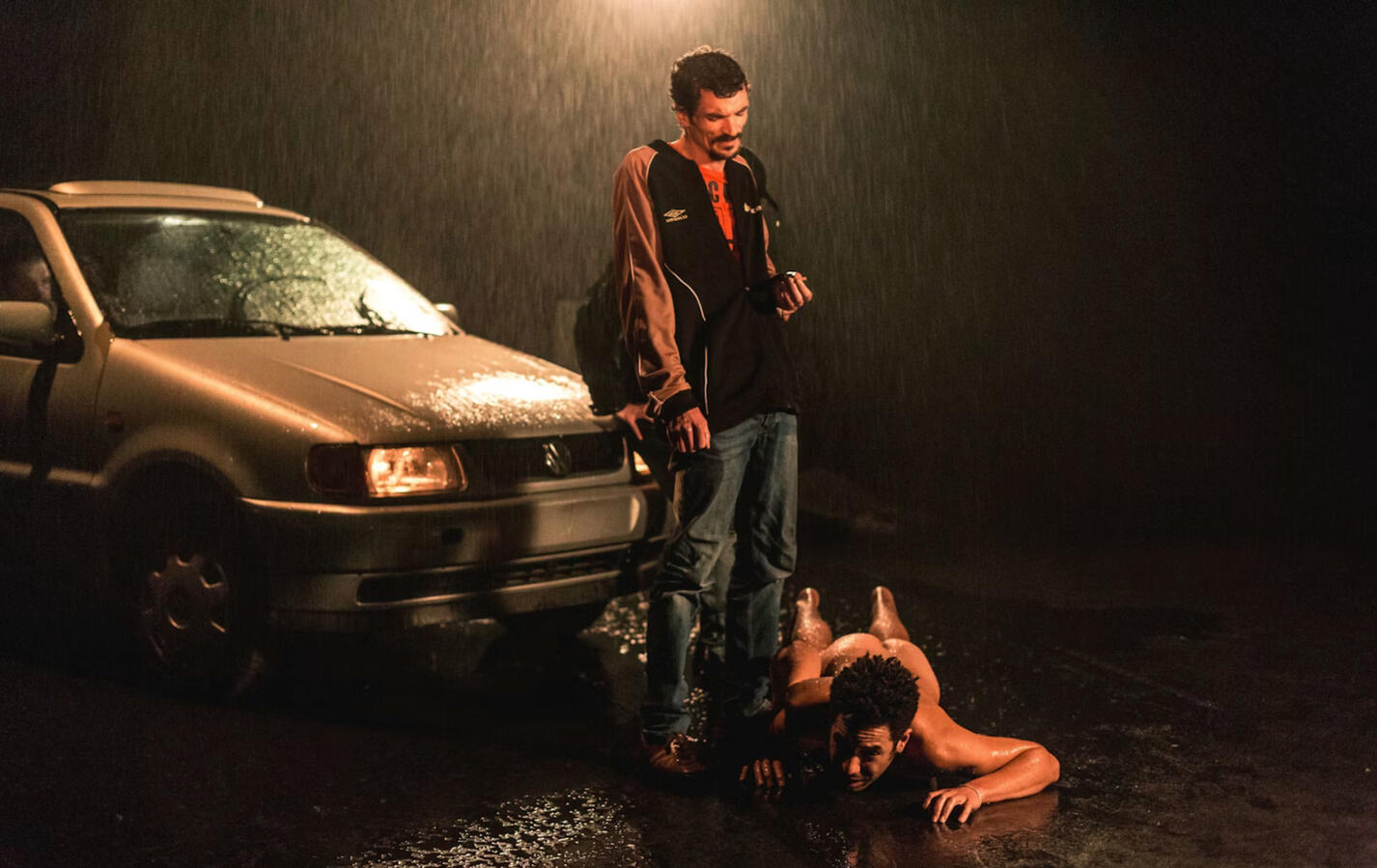
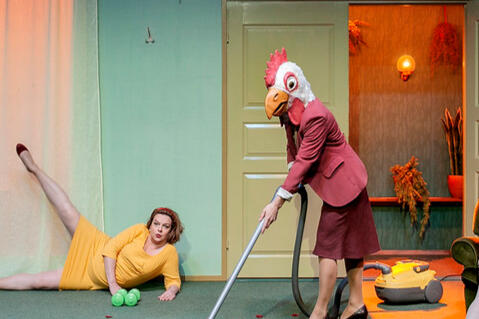
This essay and the performance it describes was developed for the Baustelle Brecht (Construction Site Brecht / Working with Brecht) symposium. An earlier form of theis essay was delivered with Annegret Marten at the Literaturforum im Brechthaus, where Brecht once lived. It grew out of a project to translate and create a contemporary theatre adaptation of Bertolt Brecht’s Messingkauf Dialogues. In the essay, I argue that Brecht’s attempt to found a 'theatre for the scientific age', explicitly modeled on Francis Bacon’s New Scientific Organon, follows Bacon's effort to ritually summon a new epoch into being through the technē of the age: Brecht's stage performance and Bacon's printed text.Placing Bacon in an alchemical context reveals his project to replace the Biblical injunction to steward nature with a paradigm of domination. Bacon’s New Organon is the second volume in a planned (but unfinished) 'great work’. Titled The Great Instauration of Human Dominion over the Universe, the epistemological tools Bacon recruits — measurement and division — would become the instruments of empire, flattening phenomena into categories legible to control and exploitation.The essay traces how Brecht’s project to transform theatre roots itself in the same Baconian ground as the systems of empire Brecht sought to overthrow. The thesis that Bacon's science and Brecht's theatre are intended as ritual technologies for summoning worlds into being marks the end of a decade-long engagement with Brecht's idea of theatre as interruption — a kind of traffic accident in the flow of reality, opening a portal where transformation occurs. I have come to see interactive narrative systems — video games and XR — as comparable occult technologies for accessing other worlds, opening up experimental sites of encounter for rehearsing participatory co-creation.
THE REALNESS:
On Rimini Protokoll’s robot theatre, the more-than-human future of art, and exiting the prison of the self
Genre: Art Writing
Date: 2019
Outlet: Frieze Magazine
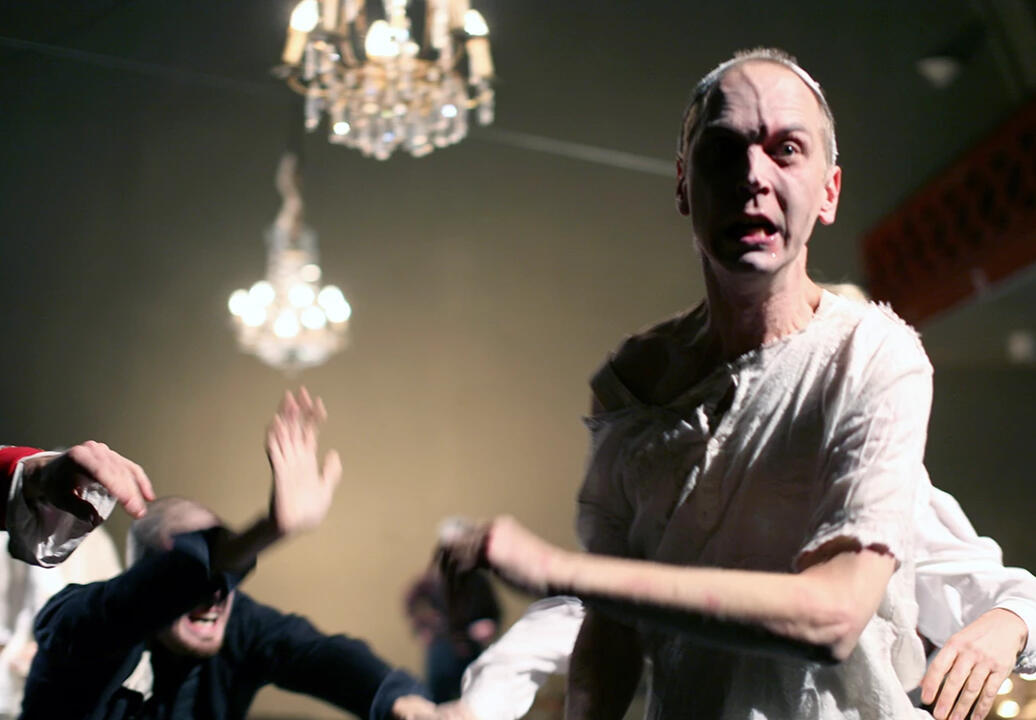
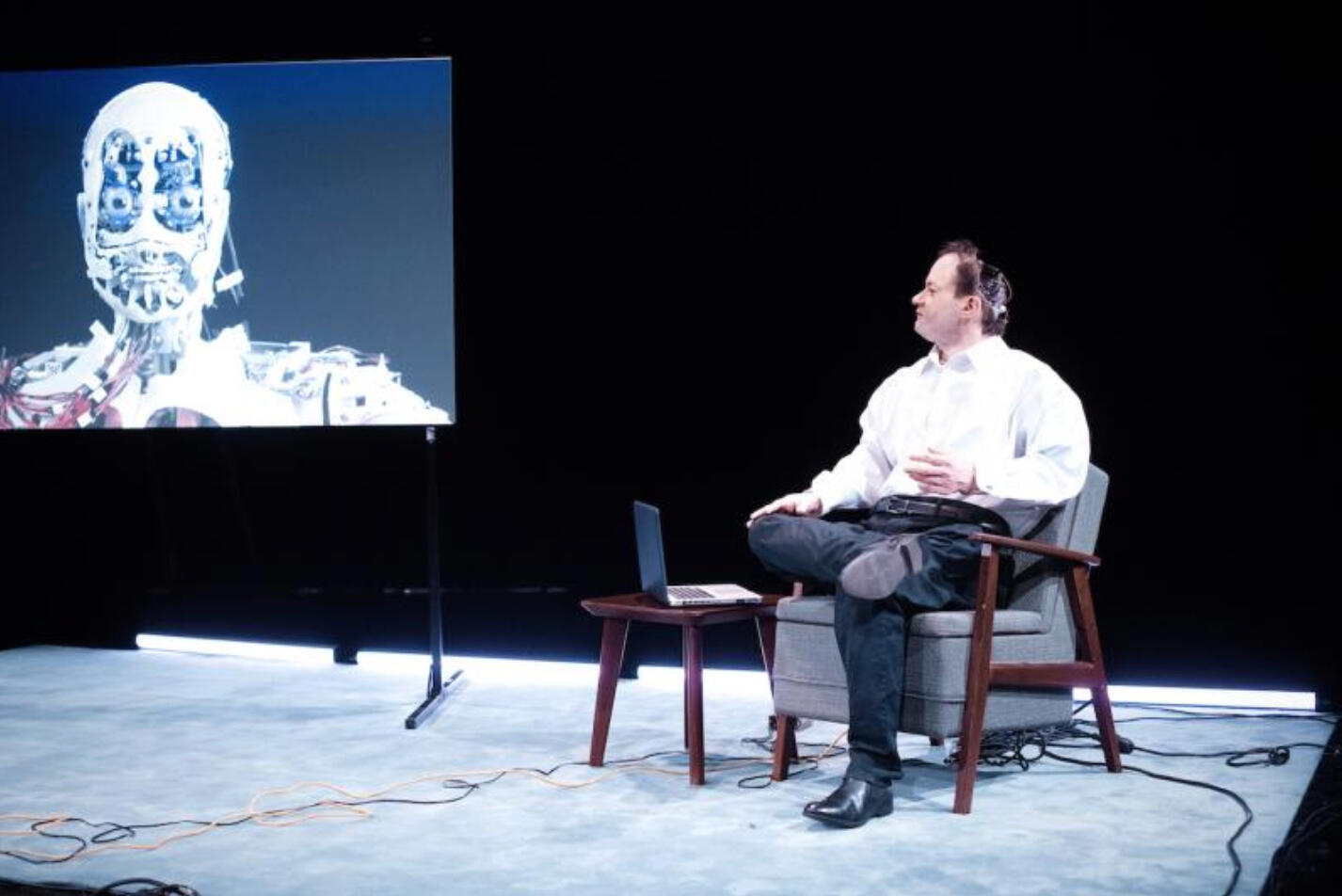
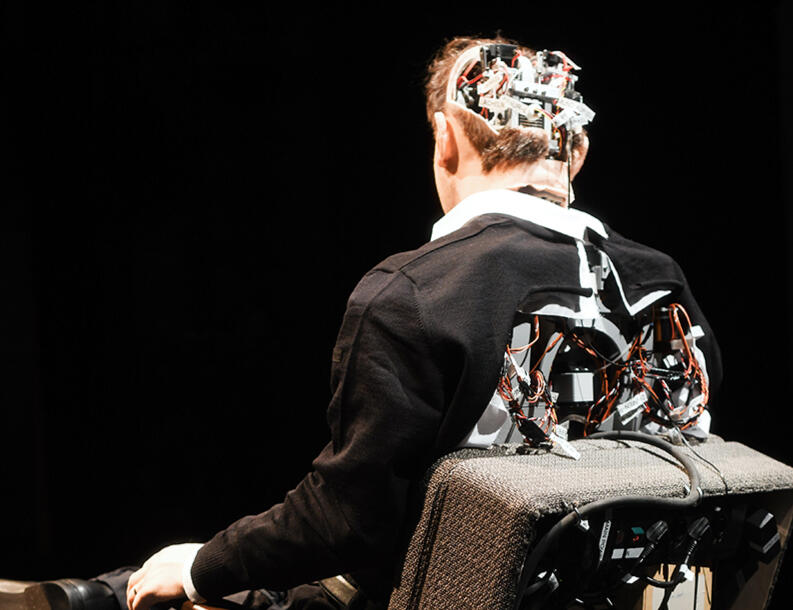
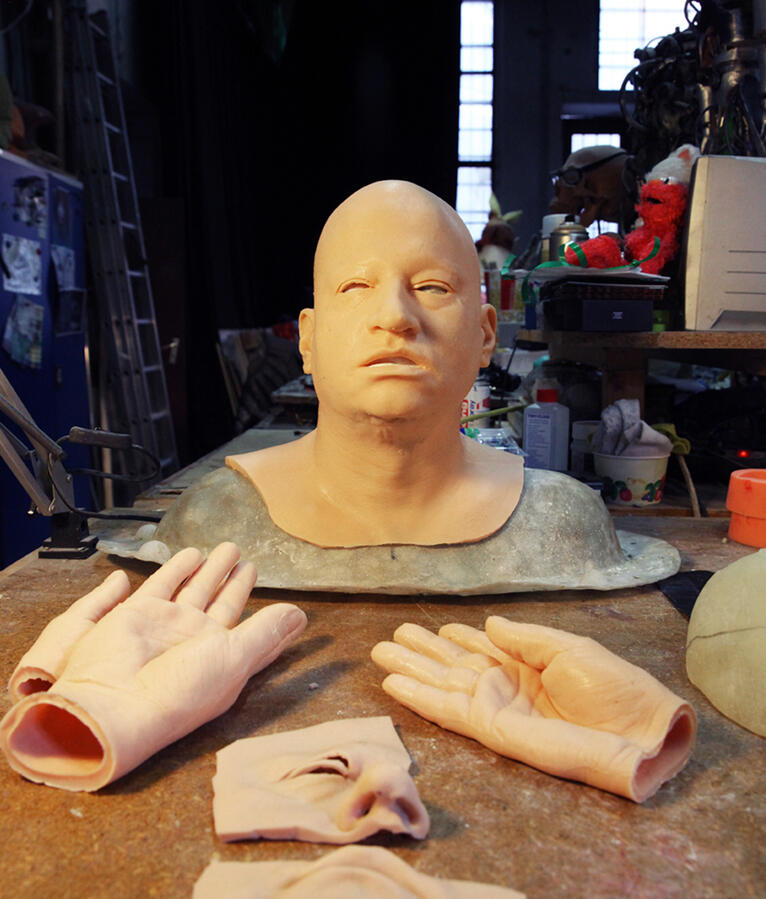
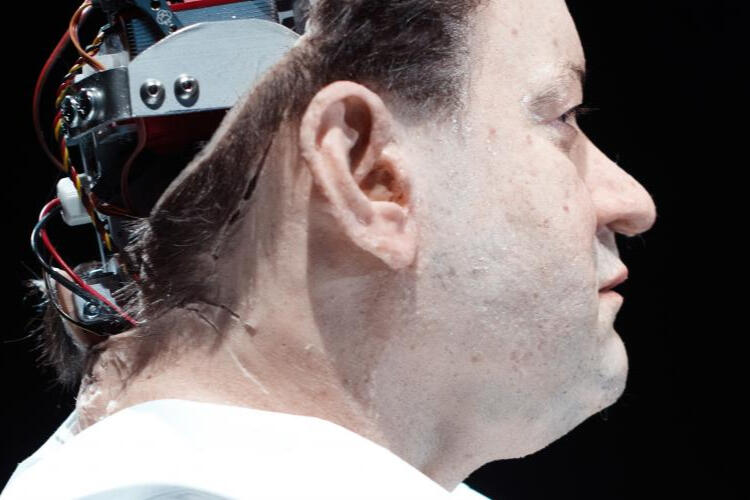
This is an op-ed for Frieze about how emerging technologies recalibrate what it means to be human. Rimini Protokoll’s Uncanny Valley stars a humanoid ‘actor’ or 'actroid' in the likeness of Thomas Melle, a German writer known for his confessional work. By placing Melle's voice and ruminative words on selfhood in the mouth of a robitoic replica, the performance playfully dismantles theatre-as-form and the Englightenment model of subjectivity encoded within it.I argue that it is Melle — not the robot — who emerges from the performance as automaton. His life — scripted by the inherited perceptual ideology that meaning proceeds from the self and detailed in Melle's own account of his struggle to 'play the author' — has turned out to be unlivable. The uncanny presence of his robotic double reveals the metaphysical burden to be whole, sovereign and singular as the source of the internal fracture. By displacing the human subject, the robot makes space for a new reality to emerge onstage: beyond the dethroned, anthropocentric body lies a truer, more vibrant relational world.
COP15 Climate Justice Protests

Genre: Reportage (writing and photography)
Date: 2010
Outlet: Various
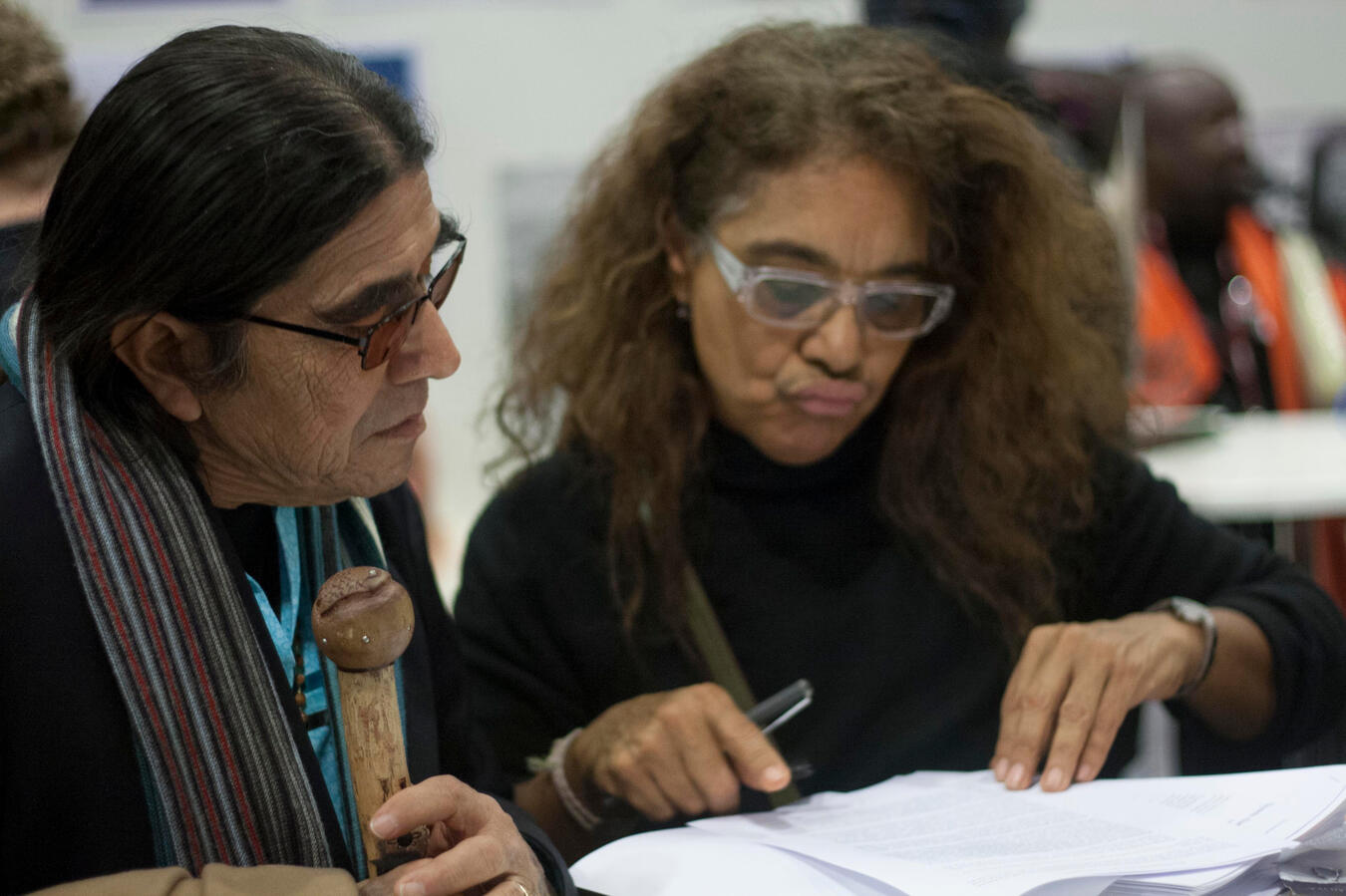
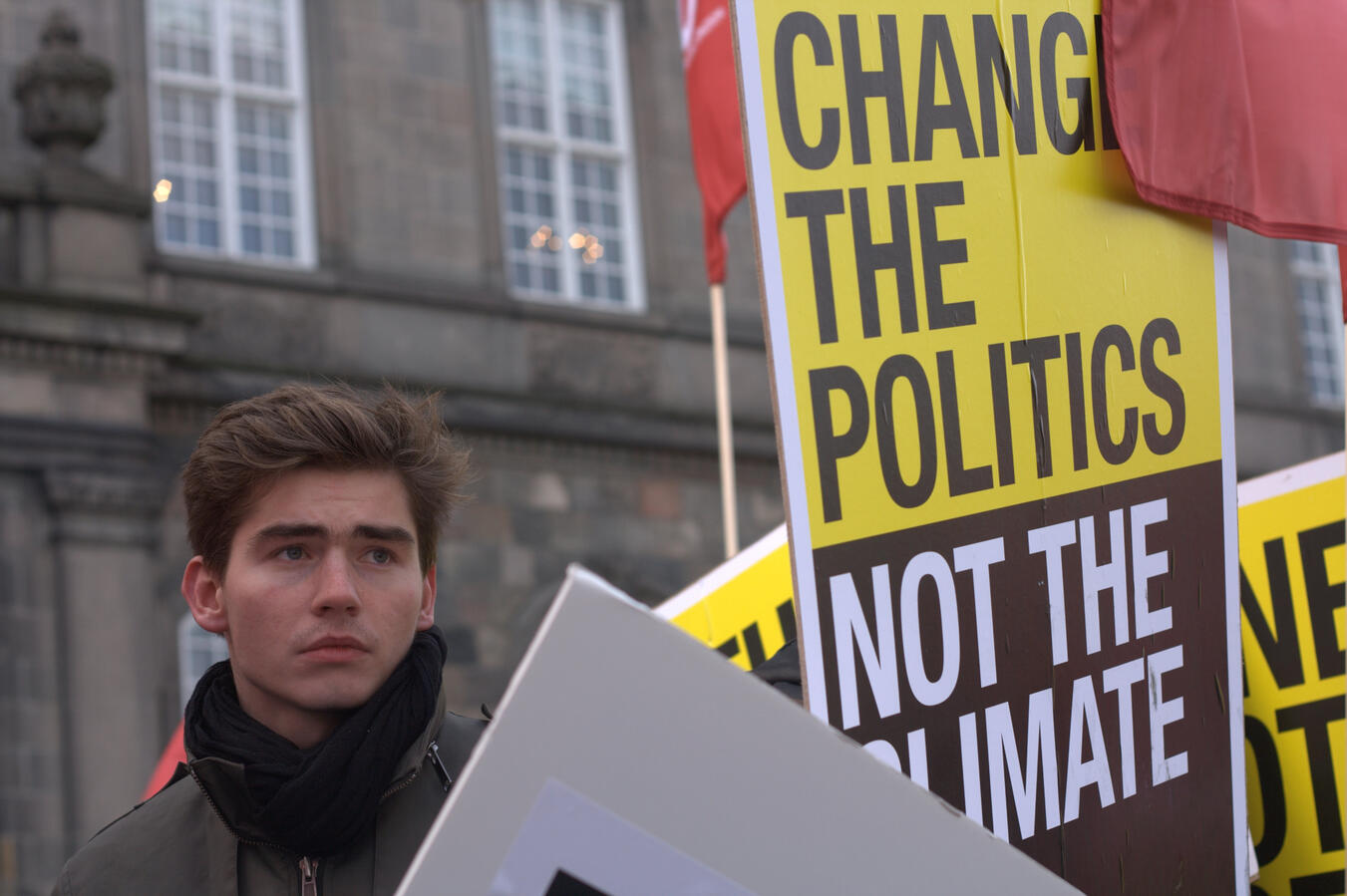
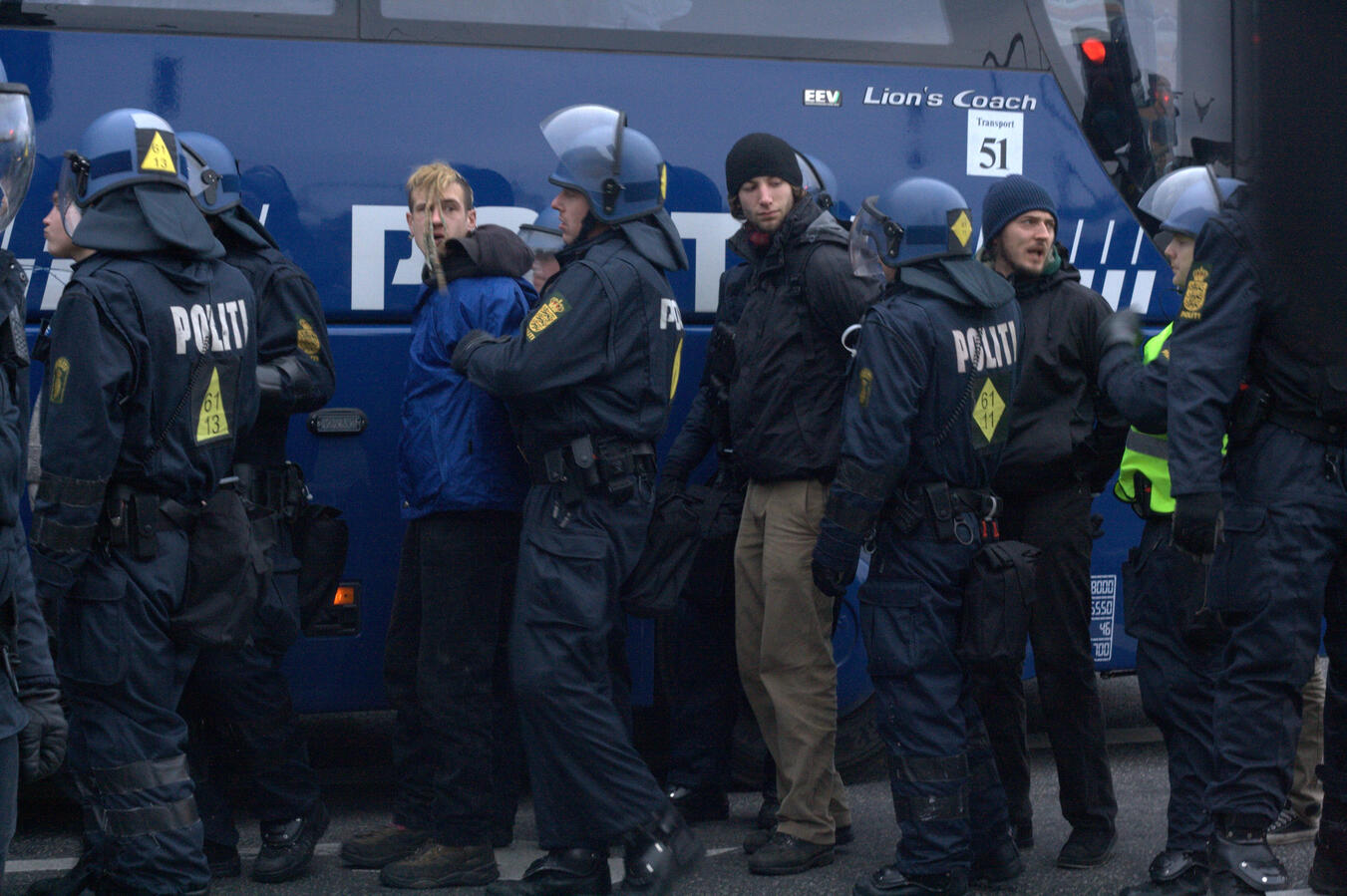
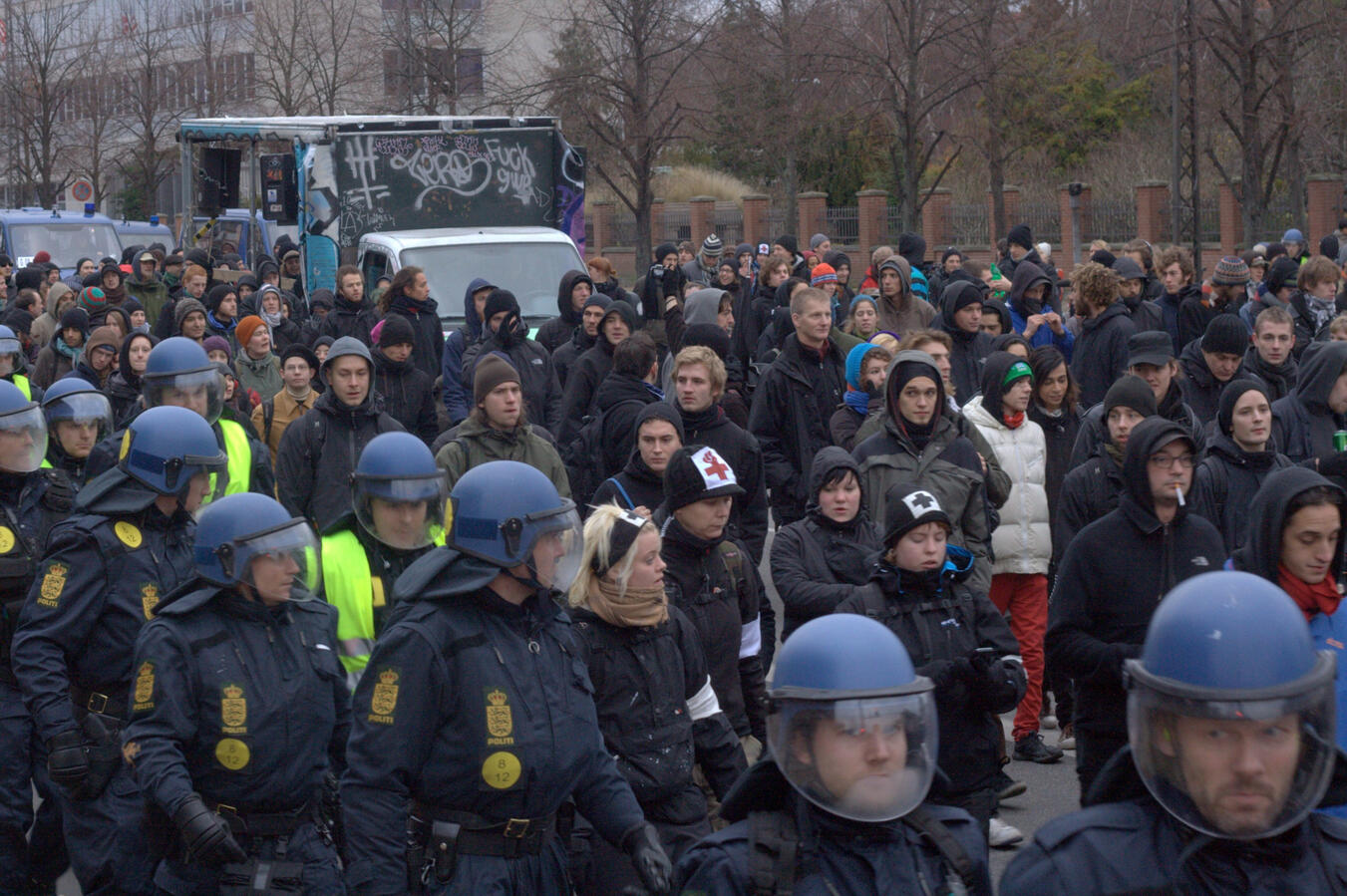
Climate Circus is the last of a series of written and photographic reportage from the UN Climate Summit (COP15) in Copenhagen for titles across the UK, Germany and Middle East. The Copenhagen summit was the birthplace of the Climate Justice Action Network and the first truly global uprising of the 21st century — a fevered, anticipatory moment where protest, culture, and technology, ancient pasts and imagined futures spilled into the streets of Copenhagen in a collective fever-dream.In the aftermath of the 2008 financial crisis — and on the rising tide of unrest that would crest with the global and technological revolutions of the 2010s — it felt, briefly, as if the world might tip on its axis. While embedded with Climate Justice Action and Indymedia founders, I spent time with the hackers, Indigenous organizers, theorists, and direct-action networks experimenting with hardware, communications systems, and cryptography as tools of improvised resistance.Copenhagen emerges from these artcles as a kind of dollhouse: its public squares are a series of stages where global struggles play out in miniature. On them, marches, assemblies, and arrests unfold as spectacle, signalling upheaval while safeguarding continuity. COP15 presages the absorption of the aesthetics of insurgency into institutional discourse where its gestures circulate as cultural capital, feeding the hierarchies it once sought to overthrow.